Table of Contents
Vegan Cabbage Rolls (Asian-Inspired Wraps) – With a Savory Chinese Brown Garlic Sauce
Growing up in Morocco, stuffed vegetables were a weekly ritual in my mother’s kitchen—bell peppers, zucchini, and vine leaves simmered in fragrant broths. When I moved to New York City, I fell in love with the vibrant flavors of Chinatown, especially the umami-rich sauces. This recipe for Asian-inspired vegan cabbage rolls is my personal fusion: the comforting, wrapped concept of my childhood, filled with a savory rice and veggie mixture and absolutely drenched in a glossy, aromatic Chinese brown garlic sauce. It’s a dish that feels both familiar and excitingly new.
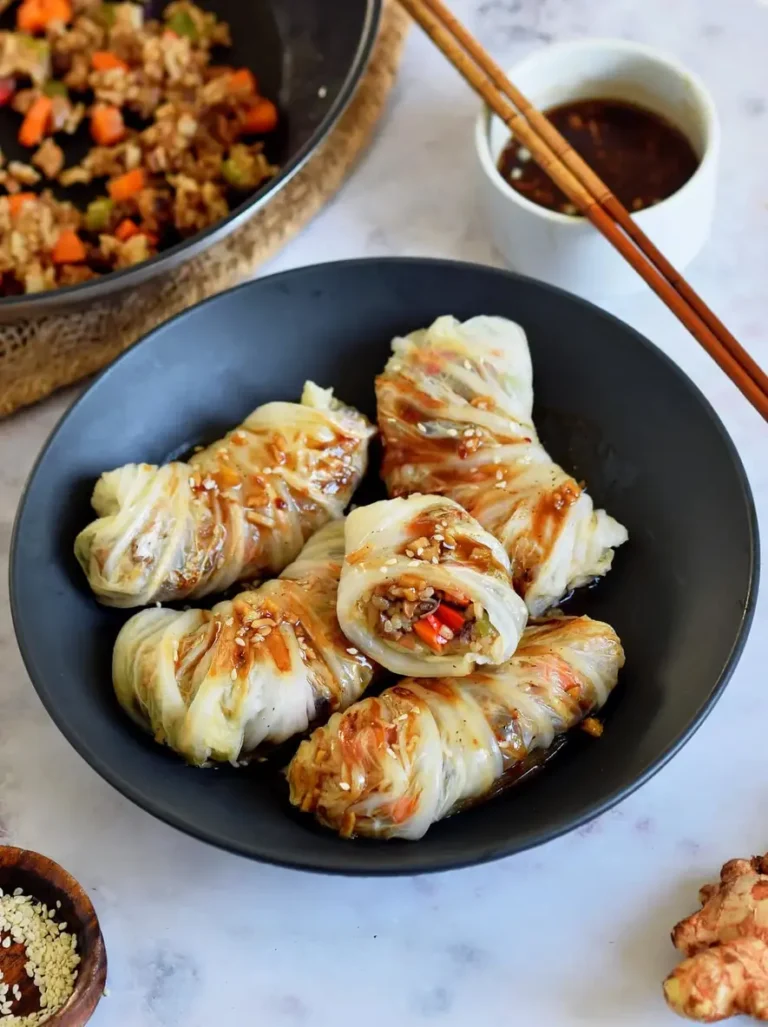
Imagine tender, slightly sweet napa cabbage leaves, softened just enough to be pliable without losing their delicate bite. Inside, a warm filling of short-grain sushi rice, sautéed onions, ginger, garlic, crisp carrots, colorful peppers, and earthy mushrooms, all seasoned with tamari and a hint of red pepper flakes. The magic, though, is in the sauce—a quick skillet sauce where ginger and garlic sizzle in sesame oil, mingling with tamari, a touch of maple syrup, and rice vinegar, then thickened to a perfect, clingy consistency with a cornstarch slurry. Each roll is pan-seared until golden, creating a delightful textural contrast before being generously coated in that savory, glossy sauce.
As a chef trained in Paris, I know that technique is everything for a dish like this. My version ensures the cabbage leaves are perfectly blanched—not mushy—and the filling has the ideal sticky texture to hold together. I’ll share my pro tip for rolling them tightly so they don’t fall apart, and I’ll warn you about the one common mistake that can make your sauce too thick or gloopy. This recipe is naturally gluten-free, vegan, and incredibly versatile, making it a stunning centerpiece for any meal.
Why This Vegan Cabbage Rolls Recipe Is the Best
The flavor secret here is twofold. First, the filling uses sushi rice, which, when soaked and cooked properly, becomes wonderfully sticky and cohesive—a trick I learned working with rice in Parisian kitchens. Second, the Chinese brown garlic sauce isn’t an afterthought; it’s the star. By building it in the same pan you sear the rolls, you capture all the fond (those delicious browned bits), creating a deeply savory, complex base that bottled sauces can’t match.
Perfected texture is non-negotiable. Blanching the napa cabbage leaves for exactly 2-3 minutes in boiling water, then shocking them in ice water, is the chef’s method for achieving leaves that are supple enough to roll but still have structural integrity. This prevents them from tearing or becoming a soggy mess during the final pan-sear, which gives each roll a beautiful, caramelized exterior.
This recipe is foolproof & fast because I’ve streamlined the process. You’ll cook the rice and blanch the leaves simultaneously, then sauté the veggies while the rice finishes. The rolling is simple once you get the hang of the fold-and-tuck technique I’ll show you. Even the sauce comes together in under 5 minutes. It’s designed for a home cook’s schedule, delivering restaurant-quality results without the stress.
Vegan Cabbage Rolls Ingredients
I find most of these ingredients at my local Asian market in Queens or even in the well-stocked international aisle of a standard NYC grocery store. The napa cabbage should feel heavy for its size, and I always look for fresh, firm ginger root—it makes all the difference compared to the jarred stuff. Using canned mushrooms here is a great shortcut I picked up for busy weeks; they offer a meaty texture without the prep.
Ingredients List
- 1 1/4 cups dry sushi rice (or any short-grain rice)
- 1 large napa cabbage (10-12 leaves)
- 1 tbsp neutral oil, divided (like avocado or grapeseed)
- 1 medium onion, diced
- 3/4 tbsp fresh ginger, minced
- 3 garlic cloves, minced
- 1 medium carrot, diced
- 2 medium bell peppers (any color), diced
- 8 white button mushrooms, diced (canned are fine, drained)
- 2 tbsp tamari or coconut aminos
- 1/2 tsp each of sea salt, ground black pepper, onion powder
- 1/4 tsp red pepper flakes (or to taste)
- Sesame seeds, for garnish
For the Chinese Brown Garlic Sauce:
- 1 tsp sesame oil (or neutral oil)
- 1/2 tbsp fresh ginger, minced
- 2 garlic cloves, minced
- 1 1/2 tbsp tamari or coconut aminos
- 1 tbsp rice vinegar
- 3/4 tbsp maple syrup (or agave)
- 1/2 cup water
- 1/2 tbsp cornstarch
- Salt, pepper, red pepper flakes, smoked paprika to taste
Ingredient Spotlight
Napa Cabbage: This is your wrapper. Its mild, slightly sweet flavor and broad, flexible leaves are ideal. Look for heads with crisp, tightly packed pale green leaves. Avoid any with brown spots or wilting. If you can’t find it, savoy cabbage leaves, blanched a minute longer, can work, though they have a stronger flavor.
Sushi Rice: This short-grain rice is the glue of the filling. When soaked and cooked, it releases starch that makes the mixture stick together perfectly. In a US grocery store, look for “Calrose” or “sushi rice” near other rice. Substitution with long-grain rice like jasmine is possible, but the filling will be less cohesive and more fluffy.
Tamari: This is my go-to for a rich, wheat-free soy sauce flavor. It’s less salty and more complex than standard soy sauce. You’ll find it in the Asian aisle or health food section. Coconut aminos are a great sweeter, soy-free alternative. Using regular soy sauce will work but isn’t gluten-free.
Fresh Ginger & Garlic: These are non-negotiable for the aromatic base of both the filling and the sauce. Pre-minced jars lack the bright, pungent kick. Select ginger with smooth, taut skin. A microplane is your best tool for mincing both without effort.
| Original Ingredient | Best Substitution | Flavor / Texture Impact |
|---|---|---|
| Napa Cabbage | Savoy Cabbage Leaves | More robust, slightly bitter flavor; leaves are more textured and may require longer blanching. |
| Sushi Rice | Jasmine or Brown Rice | Filling will be less sticky and more separate; may require a binder like a tbsp of ground flaxseed. |
| Tamari | Coconut Aminos or Lite Soy Sauce | Coconut aminos are sweeter, less salty; soy sauce is saltier and contains gluten. |
| Fresh Button Mushrooms | Canned Mushrooms or Dried Shiitake (rehydrated) | Canned offer convenience and a soft texture; dried shiitake add a deeper, woodsy umami. |
| Maple Syrup (in sauce) | Agave Nectar or Brown Sugar | Agave is neutral; brown sugar will add a subtle molasses note and may make the sauce darker. |
How to Make Vegan Cabbage Rolls — Step-by-Step
Don’t let the rolling intimidate you! I’ve broken this down into clear, manageable steps. The key is organization—get your mise en place ready, just like we did in culinary school, and the process will flow smoothly from start to finish.
Step 1: Prepare Rice and Cabbage
Start by soaking the 1 1/4 cups of sushi rice in a large bowl of cool water. Let it sit for 45-60 minutes; this step is crucial for even cooking and achieving that sticky texture. Drain the rice thoroughly. Cook it in a saucepan with the appropriate amount of water (usually a 1:1.25 rice-to-water ratio) and a pinch of salt until tender, about 10-12 minutes after it comes to a boil. Fluff and set aside.
⚠️ Common Mistake to Avoid: Skipping the rice soak. This leads to a crunchy center and uneven texture in your filling. If you’re short on time, rinse the rice vigorously under cold water until it runs clear, but a soak is best.
Step 2: Blanch Cabbage Leaves
While the rice soaks/cooks, carefully separate 10-12 large, intact leaves from the napa cabbage. Bring a large pot of water to a rolling boil. Using tongs, submerge 3-4 leaves at a time and cook for 2-3 minutes, just until they turn bright green and are pliable. Immediately transfer them to a large bowl filled with ice water to stop the cooking. Pat them dry gently with a clean kitchen towel and set aside on a plate.
💡 Pierre’s Pro Tip: Have your ice bath ready before you start blanching. Shocking the leaves in cold water halts the cooking process instantly, preserving their vibrant color and perfect texture—a technique called “refroidir” we used daily in Paris.
Step 3: Sauté the Veggie Filling
Heat 1/2 tablespoon of oil in a large skillet or wok over medium-high heat. Add the diced onion, minced ginger, and minced garlic. Sauté for 1 minute until fragrant. Add the diced carrot, bell peppers, and mushrooms. Cook, stirring frequently, for 3-4 minutes until the vegetables are just tender but still have a slight crunch. Add the 2 tablespoons of tamari, 1/2 teaspoon each of salt, pepper, and onion powder, and the red pepper flakes. Stir and cook for another 1-2 minutes.
Step 4: Combine Filling and Roll
Add the cooked sushi rice to the skillet with the sautéed vegetables. Turn off the heat and stir everything together until well combined. Taste and adjust seasoning with more tamari or spices if needed. Let the mixture cool slightly for easier handling. Lay one blanched cabbage leaf flat on a cutting board. Place about 1 1/2 to 2 tablespoons of the rice mixture in the center of the leaf, near the stem end. Fold the sides of the leaf inward over the filling, then fold the bottom (stem end) up and over, rolling it away from you into a tight bundle. Place seam-side down on a plate. Repeat with remaining leaves and filling.
⚠️ Common Mistake to Avoid: Overfilling the leaves. Using more than 2 tablespoons of filling makes them difficult to roll tightly and they are more likely to burst open during searing. It’s better to make a few extra rolls than to overstuff them.
Step 5: Pan Sear the Rolls
Heat the remaining 1/2 tablespoon of oil in a large non-stick skillet over medium heat. Once hot, carefully place 5-6 cabbage rolls in the pan, seam-side down. Cook for 2-3 minutes per side, or until they develop a beautiful golden-brown crust. Work in batches if necessary to avoid crowding the pan. Transfer the seared rolls to your serving platter.
Step 6: Make the Garlic Sauce
In the same skillet (those browned bits are flavor gold!), add 1 teaspoon of sesame oil over medium heat. Add the 1/2 tablespoon minced ginger and 2 minced garlic cloves, sautéing for 30 seconds until fragrant. Pour in the 1 1/2 tbsp tamari, 1 tbsp rice vinegar, and 3/4 tbsp maple syrup. Let it simmer for 1 minute. In a small bowl, whisk the 1/2 cup water with the 1/2 tbsp cornstarch to create a smooth slurry. Pour this into the skillet while stirring constantly. Add a pinch of salt, pepper, red pepper flakes, and a dash of smoked paprika if desired. Cook, stirring, for 2-3 minutes until the sauce thickens to a glossy, gravy-like consistency.
💡 Pierre’s Pro Tip: Always make your cornstarch slurry cold. Adding cornstarch directly to hot liquid causes it to clump instantly. Whisking it into cold water first ensures a perfectly smooth, lump-free sauce every time.
Step 7: Serve and Garnish
Pour the warm Chinese brown garlic sauce over the pan-seared cabbage rolls on your serving platter. Garnish generously with toasted sesame seeds and perhaps a few thinly sliced green onions or a sprinkle of fresh cilantro. Serve immediately while everything is warm.
| Step | Action | Duration | Key Visual Cue |
|---|---|---|---|
| 1 | Soak & Cook Rice | 45-60 min soak + 12 min cook | Rice is tender, translucent, and sticky. |
| 2 | Blanch Leaves | 2-3 min per batch | Leaves turn bright green and are pliable. |
| 3 & 4 | Sauté Filling & Roll | 8-10 min total | Veggies are tender-crisp; rolls are tight bundles. |
| 5 | Pan Sear Rolls | 4-6 min per batch | Rolls are golden brown on both sides. |
| 6 | Make Sauce | 4-5 min | Sauce is glossy and coats the back of a spoon. |
Serving & Presentation
Presentation is part of the joy of cooking. I love arranging these Asian-inspired vegan cabbage rolls on a large, shallow platter, slightly overlapping, with the glossy brown sauce cascading over them. The contrast of the pale green cabbage against the dark sauce and white sesame seeds is stunning. For a NYC dinner party touch, I might add a few edible flowers or microgreens on the side.
Think of this as a complete meal centerpiece. In Morocco, stuffed dishes are often served with simple sides to complement, not compete. Here, the rolls are rich and savory, so I recommend light, fresh accompaniments. A crisp cucumber salad with a rice vinegar dressing or a simple bowl of miso soup would be perfect starters. For a heartier meal, serve them over a bed of steamed jasmine rice or quinoa to soak up every last drop of that incredible sauce.
| Pairing Type | Suggestions | Why It Works |
|---|---|---|
| Side Dish | Steamed Jasmine Rice, Quinoa, Simple Stir-Fried Greens (Bok Choy, Gai Lan) | Provides a neutral base for the flavorful rolls and sauce; greens add a fresh, bitter counterpoint. |
| Sauce / Dip | Extra Garlic Sauce, Sriracha Mayo, Sweet Chili Sauce | Offers customizable heat and creaminess; allows guests to adjust flavor to their liking. |
| Beverage | Jasmine Green Tea, Crisp Lager, Pinot Gris | Tea cleanses the palate; lager and Pinot Gris have bright acidity that cuts through the savory richness. |
| Garnish | Toasted Sesame Seeds, Sliced Green Onions, Fresh Cilantro, Lime Wedges | Adds texture, color, and bursts of fresh, citrusy flavor that brighten the entire dish. |
Make-Ahead, Storage & Reheating
As a busy New Yorker, I’m a huge proponent of meal prep. These cabbage rolls are fantastic for it. You can assemble the entire dish up to the point of searing and saucing, then store components separately. This makes for a stunning, stress-free weeknight dinner or an impressive last-minute appetizer for guests.