Table of Contents
Sour Cream Coffee Cake Loaf – Tender and Crumbly
Growing up in Morocco, my mother would often make a simple semolina cake for afternoon tea—a humble, comforting treat that filled our home with the scent of warm butter and cinnamon. When I moved to Paris for culinary training, I discovered the French love for rich, moist cakes made with crème fraîche. This Sour Cream Coffee Cake Loaf is my New York City-inspired fusion of those memories: a tender, tangy loaf with a cinnamon crumb topping that’s perfect for breakfast or brunch. The sour cream is the secret here, giving the cake an incredibly moist crumb that stays fresh for days.
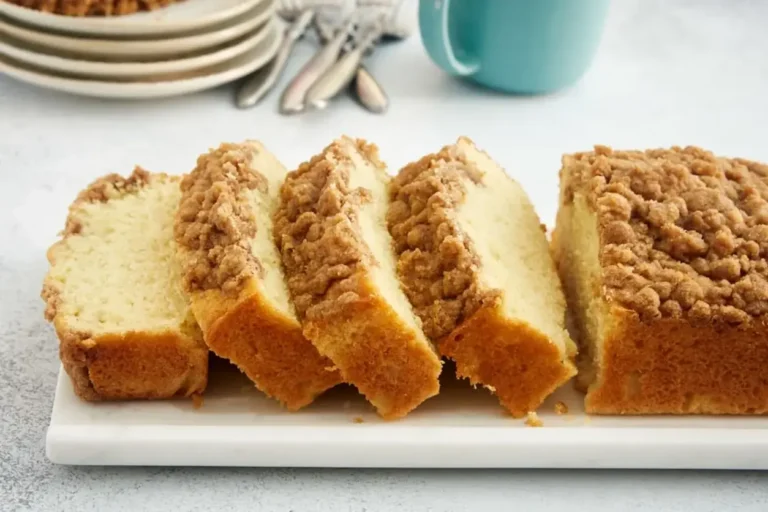
Imagine slicing into a golden loaf that’s soft and tender, with a ribbon of cinnamon-sugar crumb running through the middle and a generous topping that crisps up beautifully in the oven. The aroma that fills your kitchen is pure comfort: notes of vanilla, cinnamon, and brown sugar. Each bite offers a contrast of textures—the velvety cake against the sandy, crunchy crumb—with just a kiss of tang from the sour cream, which balances the sweetness perfectly. It’s the kind of loaf that disappears within minutes from a weekend brunch table.
I’ve tested this recipe countless times to get the perfect balance between a light, fluffy interior and a sturdy crumb topping that doesn’t sink into the batter. The key is alternating the dry ingredients and sour cream, which builds a robust structure. A common mistake is overmixing the batter once the flour is added, which can make the loaf dense. I’ll show you exactly how to avoid that, and my Pro Tip for getting the crumb topping to stay put will make all the difference. This is a foolproof recipe that any home baker can nail on the first try.
Why This Sour Cream Coffee Cake Loaf Recipe Is the Best
The Flavor Secret: The real star here is the sour cream, which does double duty: it adds a subtle tang that wakes up the palate and also denatures the gluten proteins, ensuring the cake stays exceptionally tender. Combined with a generous cinnamon-brown sugar crumb, both inside and on top, every bite is packed with warm, aromatic flavor. I learned this technique of using cultured dairy from my Parisian pastry chef days; it’s the same principle behind a classic crème fraîche cake.
Perfected Texture: This loaf achieves a delicate balance: it’s moist and velvety without being dense or heavy. The secret lies in the creaming method—beating the softened butter and granulated sugar until light and fluffy, then incorporating the eggs one at a time. This aerates the batter, creating a fine, even crumb. The sour cream also introduces a gentle acidity that activates the baking soda, giving the cake extra lift.
Foolproof & Fast: This recipe comes together in just 15 minutes of active prep. You don’t need a mixer for the crumb topping—just a bowl and a fork. The ingredients are pantry staples: flour, sugar, butter, eggs, sour cream, and cinnamon. Even if you’re a beginner, the visual cues I provide throughout will guide you to a perfect loaf every time. It’s an ideal recipe for a cozy Sunday morning when you want something impressive with minimal effort.
Sour Cream Coffee Cake Loaf Ingredients
I love sourcing my sour cream from the Greenmarket in Union Square—the local brands have a thicker, richer texture. For the cinnamon, I always buy from a spice shop in Little Italy; the flavor is much more pungent and warm than the supermarket variety. This combination of fresh, quality ingredients truly makes a difference in the final loaf.
Ingredients List
- 1/3 cup firmly packed light or dark brown sugar
- 1/2 cup all-purpose flour
- 1 teaspoon ground cinnamon
- pinch salt
- 3 tablespoons unsalted butter (melted)
- 1 1/2 cups all-purpose flour
- 3/4 teaspoon baking powder
- 1/4 teaspoon baking soda
- 1/4 teaspoon salt
- 1/2 cup unsalted butter (softened)
- 1/2 cup granulated sugar
- 2 large eggs
- 1 teaspoon vanilla extract
- 1/2 cup sour cream
Ingredient Spotlight
Sour cream: This is the hero ingredient. It adds moisture and a gentle tang. Use full-fat for best results. Greek yogurt can be substituted, but the cake will be slightly less moist and more dense. The yogurt should be plain and full-fat for the closest texture.
Butter: Use unsalted to control the salt level. Softened butter creams easily with sugar for a light texture. For the crumb topping, melted butter creates those sandy, clumpy bits. If using salted butter, reduce the added salt by 1/8 teaspoon.
Cinnamon: Fresh, high-quality cinnamon is essential. Old cinnamon can taste flat and dusty. I recommend Vietnamese cinnamon for a stronger, sweeter flavor. You can substitute with cardamom or a mix of cinnamon and nutmeg for a different spice profile.
| Original Ingredient | Best Substitution | Flavor / Texture Impact |
|---|---|---|
| Sour cream | Plain full-fat Greek yogurt | Slightly less tangy and less moist; still works well. |
| Unsalted butter | Salted butter (reduce added salt by 1/8 tsp) | Slightly saltier finish; fine for most palates. |
| All-purpose flour (for crumb) | Gluten-free 1:1 blend | Crumb will be softer; gluten-free blend works best. |
How to Make Sour Cream Coffee Cake Loaf — Step-by-Step
This recipe is straightforward, but I’ll walk you through each step with visual cues so you can follow along confidently.
Step 1: Make the Crumb Topping
In a small bowl, combine the brown sugar, flour, cinnamon, and a pinch of salt. Drizzle in the melted butter and stir with a fork until the mixture forms clumps and sandy bits. Set aside—this will be your topping and the layer inside the loaf. Resist the urge to overwork it; you want uneven clumps for the best texture.
💡 Pierre’s Pro Tip: For extra-crunchy topping, chill the crumb mixture for 10 minutes in the freezer before sprinkling. This helps it hold its shape during baking.
Step 2: Prepare the Pan
Preheat your oven to 350°F (175°C). Line a 9-inch by 5-inch loaf pan with parchment paper, leaving a generous overhang on the long sides. Grease the paper lightly with cooking spray or butter. If you don’t have parchment, you can grease the pan generously, but the paper makes lifting the loaf out so much easier.
⚠️ Common Mistake to Avoid: Don’t skip the greasing step even with parchment. The paper itself can stick to the cake if not greased, especially around the edges.
Step 3: Whisk Dry Ingredients
In a medium bowl, whisk together 1 1/2 cups all-purpose flour, baking powder, baking soda, and salt until well combined. This aerates the flour and ensures the leavening agents are evenly distributed. Set this aside.
Step 4: Cream Butter and Sugar
Using an electric mixer on medium speed, beat the softened unsalted butter and granulated sugar together until light and fluffy, about 2 to 3 minutes. You should see the mixture pale in color and become airy. Add the eggs one at a time, beating well after each addition until fully incorporated. Mix in the vanilla extract.
💡 Pierre’s Pro Tip: Make sure your butter is truly softened—press it gently with a finger; it should give slightly without being greasy. Cold butter won’t cream properly and will lead to a dense cake.
Step 5: Alternate Flour and Sour Cream
Reduce the mixer speed to low. Add the flour mixture in three portions, alternating with two portions of sour cream. Begin and end with the flour mixture. Mix just until each addition is incorporated—stop the mixer as soon as you see no streaks of flour. Overmixing will activate the gluten and make the cake tough.
⚠️ Common Mistake to Avoid: Do not mix on high speed after adding the flour. This can overdevelop gluten, resulting in a cake that’s rubbery instead of tender.
Step 6: Layer and Top
Transfer about half of the batter into the prepared loaf pan and spread it evenly with a spatula. Sprinkle about half of the crumb mixture evenly over the batter. Carefully spoon the remaining batter on top, spreading it gently to cover the crumb layer. Finally, sprinkle the remaining crumb mixture over the top.
💡 Pierre’s Pro Tip: To prevent the top crumb from falling off after baking, gently press it into the batter with your fingertips. This helps it adhere as the loaf rises.
Step 7: Bake
Bake the loaf for 40 to 45 minutes, or until the top is deep golden brown and a wooden skewer inserted into the center comes out clean or with just a few moist crumbs attached. If the top is browning too quickly after 30 minutes, tent loosely with aluminum foil.
⚠️ Common Mistake to Avoid: Underbaking is the most common issue. Because sour cream adds moisture, the cake can look done on the outside but still be raw inside. Always test with a skewer inserted all the way to the bottom.
Step 8: Cool and Serve
Cool the cake in the pan on a wire rack for 15 minutes. Then use the overhanging parchment to lift the loaf out of the pan and transfer to the wire rack to cool completely. For the cleanest slices, wait until the loaf is fully cool—at least 1 hour. Wrap in plastic wrap if you want to speed up cooling while keeping the crust soft.
💡 Pierre’s Pro Tip: For cleaner slicing, use a serrated knife and a gentle sawing motion rather than pressing down. This prevents the crumb topping from crumbling off.
| Step | Action | Duration | Key Visual Cue |
|---|---|---|---|
| 1 | Make crumb topping | 2 mins | Forms clumps and sandy bits |
| 2 | Prepare pan & preheat oven | 5 mins | Parchment overhangs on long sides |
| 3 | Whisk dry ingredients | 2 mins | Flour is aerated and uniform |
| 4 | Cream butter & sugar | 2–3 mins | Pale, light, and fluffy |
| 5 | Alternate flour and sour cream | 1–2 mins | No streaks of dry flour remain |
| 6 | Layer batter and crumb | 3 mins | Two layers of batter and one middle crumb |
| 7 | Bake | 40–45 mins | Golden brown; skewer comes out clean |
| 8 | Cool and serve | 15 mins in pan + 1 hr cooling | Completely cool to room temperature |
Serving & Presentation
For a picture-perfect presentation, slice the loaf with a serrated knife and arrange the slices on a wooden board. Dust lightly with powdered sugar for an elegant touch—reminiscent of the pastry shops in Paris where I trained. The contrast of the white snow against the golden crumb makes it irresistible.
This loaf pairs beautifully with a hot cup of coffee or a latte. In my NYC kitchen, I love serving it warm from the oven with a dollop of crème fraîche or a drizzle of honey—a nod to my Moroccan roots where honey and warm pastries are a classic pairing. For brunch, I often serve it alongside fresh berries and a simple green salad to balance the sweetness.
| Pairing Type | Suggestions | Why It Works |
|---|---|---|
| Side Dish | Fresh berries, sliced apples | Brightens the richness of the cake |
| Sauce / Dip | Whipped cream, crème fraîche, honey | Adds creamy Sour Cream Coffee Cake LoafDescriptionThis Sour Cream Coffee Cake Loaf is simply delicious with its soft cake and cinnamon crumb topping! Ingredients
Scale
Instructions
About Me Hey! I’m Pierre, the heart behind Meaty Delights. Cooking has always been my passion, and I love creating bold, flavorful recipes that make every meal truly memorable.
Recent Recipes |