Table of Contents
Hibachi Steak Bowls with a Tangy Teriyaki Glaze – Quick Comfort Food
Growing up in Morocco, I learned early how a simple seasoning could turn an ordinary dish into a celebration. As I moved to Paris for culinary school and then settled in bustling New York City, that lesson took on new flavors. Today I bring you “Hibachi Steak Bowls” – a quick, comforting meal that infuses the classic American bowl with a Japanese-inspired teriyaki glaze. This personal twist captures the smoky, umami notes of a Benihana steakhouse, while keeping the prep family‑friendly and time‑efficient.
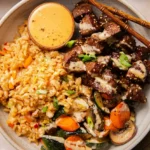
Picture a sizzling skillet where chunks of seasoned sirloin chase their buttery, sesame‑glazed sisters—carrots, zucchini, and earthy mushrooms—into a golden embrace. The aroma of garlic, ginger, and mirin wafts through the kitchen, turning simmering steam into a fragrant prelude. Once plated over fluffy fried rice, each spoonful reveals a contrast of textures: a spicy tang from the teriyaki glaze, a gentle crisp of sautéed herbs, and a creamy, buttery backdrop from the melted butter. The sight of glossy soy‑scented sauce reflecting the kitchen light brings that Benihana magic right into my NYC apartment.
I’ve refined this bowl to balance speed and depth. The key secret lies in Marinating the steak in mirin, garlic, and ginger—this tenderizes the meat while infusing real flavor. A frequent pitfall is over‑sautéing the veggies; keep them crisp and bright, then finish them off with a quick splash of soy. And, to maximize simplicity, jalapeños can be tossed in at step four—no extra oil needed. In short, simplicity and timing take center stage for a bowl that doesn’t compromise on taste.
Why This Hibachi Steak Bowls Recipe Is the Best
The flavor secret is all about the teriyaki glaze—rich, soy‑laden, yet sweet with a whisper of citrus from mirin. This Japanese‑American fusion mirrors my travels, connecting the North African aromatic warmth I love with the clean, vibrant sauces of France and the bustling markets of NYC.
The perfected texture comes from searing the steak at medium‑high heat, creating a caramelized crust that locks in juices, while the butter‑sesame oil blend gives the veggies a glossy finish that mimics hibachi’s signature shine. The result is a bowl that’s both theatrical and comforting.
Foolproof and fast, the recipe scales from a one‑person dinner to a full coefficient for meal‑prep, as all components simmer together smoothly and require minimal attention once the skillet hits high heat. The result? A sustainable, crowd‑pleasing meal built on timing and taste.
Hibachi steak bowls Ingredients
I source each ingredient on a rainy Tuesday at the NYC Chelsea Market; the vendors there offer fresh, local produce that meets my high culinary standards, and I still remember the aroma of sizzling ginger at the Moroccan spice stall back home.
Ingredients List
- 2 lbs top sirloin steak, cut into rough chunks
- 1 tablespoon mirin
- 6 cloves of garlic, finely minced or pressed
- 2 teaspoons ginger paste
- 2 tablespoons plus 1 teaspoon sesame oil, divided
- ½ teaspoon ground white pepper (or black pepper)
- Kosher salt, to taste
- 4 tablespoons unsalted butter, divided
- 3 medium carrots, thinly cut on a bias
- 2 medium zucchinis, sliced in half lengthwise & then cut into half moons
- 4–5 ounces sliced mushrooms (I use baby bella)
- ½ teaspoon garlic powder
- 1–2 tablespoons teriyaki sauce or Japanese BBQ Sauce (we love Bachans!)
- For serving: Fried rice & store‑bought Yum Yum Sauce
Ingredient Spotlight
Top sirloin steak: Choose a cut with firm marbling but still lean enough to avoid excess fat when seared. In the U.S., look for USDA Choice fillets; a locally sourced brand provides consistent tenderness. Substitution: If you’re on a budget, ribeye chunks will deliver robust flavor, but a lighter cut is better for quick meals.
Sesame oil: This aromatic oil imparts a nutty sheen essential to hibachi flair. When fresh, it adds depth; if your bottle is past its prime, use toasted coconut or a splash of vegetable oil to keep the glaze glossy yet subtle. In a pinch, lightly sauté a few drops of olive oil and swirl in a teaspoon of toasted sesame for a home‑kitchen version.
Mirin: A Japanese sweet rice wine that tenderizes while sweetening. To make a quick swap, replace mirin with a blend of 2 tablespoons sugar and 1 tablespoon white wine, or use a 50/50 mix of water and sake for a milder version. The result will still provide the savory‑sugary profile that defines the teriyaki glaze.
| Original Ingredient | Best Substitution | Flavor / Texture Impact |
|---|---|---|
| Top sirloin steak | Ribeye chunks | Richer fat, stronger beef flavor |
| Sesame oil | Toasted coconut oil | Subtle coconut hint, still glossy |
| Mirin | Sake + sugar | Tastes slightly less sweet |
How to Make Hibachi Steak Bowls — Step-by-Step
Let’s dive into the process, step by step. By handling each element with care, you’ll achieve the authentic hibachi texture and depth of flavor in no time.
Step 1: Marinate the Steak
Place the sirloin chunks in a large bowl or clean zip‑lock bag. Add 1 tbsp mirin, finely minced garlic, 2 tsp ginger paste, 1 tsp sesame oil, ½ tsp white pepper, and a pinch of kosher salt. Toss until every piece is coated. Set aside on the counter for 30 minutes to absorb the spices.
💡 Pierre’s Pro Tip: For a more intense flavor, let the steak marinate longer—up to 2 hours if you have the time. The longer the marinating, the more the meat will take in the aromatics.
Step 2: Sauté the Veggies
Heat 2 tbsp butter and 1 tbsp sesame oil over medium heat in a wok or skillet. Drop in carrots, zucchini, and mushrooms. Stir frequently until the veggies are tender and golden brown, about 10–15 minutes. Sprinkle ½ tsp garlic powder, salt, and pepper to taste. Transfer to a plate and set aside.
⚠️ Common Mistake to Avoid: Using too much heat on the veggies will burn them and create bitterness. Keep the flame at medium and stir constantly.
Step 3: Cook the Steak
Add the remaining 2 tbsp butter and 1 tbsp sesame oil to the same pan on medium‑high. When shimmering, lay the marinated steak chunks in and sear, tossing every few seconds, until the surface is nicely browned and juices appear (about 3–4 minutes). Transfer to a heat‑proof dish, splash with 1–2 tbsp teriyaki sauce, and toss to coat.
💡 Pierre’s Pro Tip: Avoid overcrowding the pan—cook in batches if needed so the steak sears rather than steams.
Step 4: Assemble the Bowls
Divide the fried rice, steak, and sautéed veggies into 4 shallow bowls. Drizzle a finishing spoonful of store‑bought Yum Yum sauce over each bowl or serve on the side for dipping. Garnish with scallions or toasted sesame seeds if desired, then serve immediately.
⚠️ Common Mistake to Avoid: Serving the components without the Yum Yum sauce leaves the bowl feeling a bit dry. A dash of sauce or a side of Japanese mayo balances the flavors.
| Step | Action | Duration | Key Visual Cue |
|---|---|---|---|
| 1 | Marinate steak | 30 min | All pieces glazed |
| 2 | Sauté veggies | 10–15 min | Golden edges |
| 3 | Cook steak | 3–4 min | Curled skins |
| 4 | Assemble bowls | 2 min | Sauce gleam |
Serving & Presentation
When arranging your bowls, start with a scoop of fluffy fried rice as a base, then add a generous mound of steak, followed by a colorful swirl of sautéed veggies. A final drizzle of Yum Yum sauce creates a vibrant contrast and a subtle sweetness that ties the bowl together.
To elevate the plate, sprinkle chopped scallions, toasted sesame seeds, or a pinch of crushed chili flakes. If you’re craving extra freshness, a squeeze of lime and a handful of chopped cilantro complete the bright, citrusy profile reminiscent of my Moroccan couscous dishes’ final flourish.
Pair this bowl with a crisp, cold glass of lightly flavored kombucha or a smooth, lightly oaked Chardonnay. If you’re the adventurous type, add a side of miso soup or a small portion of seaweed salad to round out the meal.
| Pairing Type | Suggestions | Why It Works |
|---|---|---|
| Side Dish | [Miso soup, seaweed salad, pickled ginger] | [Adds umami and acidity] |
| Sauce / Dip | [Sriracha mayo, ponzu, extra teriyaki] | [Enhances bite with heat or brightness] |
| Beverage | [Light white wine, kombucha, sparkling water] | [Clears palate between bites] |
| Garnish | [Scallions, sesame seeds, lime wedges] | [Adds flavor bursts and visual appeal] |
Make-Ahead, Storage & Reheating
When my NYC schedule is hectic, I pre‑cook these bowls for the week, storing them in individual LATEX‑free containers. The beef stays juicy, and the veggies retain crispness with a quick stir‑in before serving.
| Method | Container | Duration | Reheating Tip |
|---|---|---|---|
| Refrigerator | Tupperware with air‑tight lids | 2 days | Reheat in microwave 90 secs, stir |
| Freezer | Zip‑lock bag | 1 month | Reheat slowly in skillet, add 1 tsp water |
| Make‑Ahead | Stoneware pieces | 3 days | Reassemble before serving |
When reheating frozen portions, I add a splash of water or a quick stir of oil to keep the meat from drying out. If you’re in a rush, the skillet reheat method I’ve mentioned still delivers a sizzling edge reminiscent of fresh hibachi cooking, so you can enjoy a hot bowl, even after a week of planning.
Variations & Easy Swaps
| Variation | Key Change | Best For | Difficulty Impact |
|---|---|---|---|
| Vegetarian | [Swap steak for thick tofu cubes] | [Veggie‑centric diners] | [Easy] |
| Gluten‑Free | [Use cauliflower rice & tamari] | [GL‑free friends] | [Easy] |
| Seasonal | [Add grilled corn & shrimp] | [Summer evenings] | [Same] |
Vegetarian Variation
Try crumbled pressed tofu marinated with the same mirin, garlic, and ginger mixture; pressing removes excess moisture so the tofu sears well, delivering that coveted buttery sear I love from the original dish. The tofu absorbs the teriyaki glaze beautifully, offering a plant‑based version that mirrors the umami intensity of the beef.
Gluten‑Free Variation
Replace fried rice with cauliflower rice for a low‑carb alternative, and switch the teriyaki sauce to a gluten‑free tamari version. The subtle difference in sweetness means you’ll need just a touch less sugar, but the bowl still smells and tastes just as indulgent.
Summer Salsa Variation
Swap out the usual veggies for a bright solar‑captured salsa of grilled corn, diced tomatoes, chopped cilantro, and jalapeños. Add a grilled shrimp fillet for protein, and boost the bowl’s freshness with a squeeze of lime. The combination creates a light, citrusy bowl perfect for hot July nights.
How long does it take to marinate the steak in this recipe?
In this recipe the steak needs at least thirty minutes to absorb the flavors of mirin, garlic, ginger, and sesame oil. If you have more time you can let the steak marinate for up to two hours, which deepens the tenderizing effect and boosts the umami boost that makes the bowl shine.
Can I substitute beef with a different protein?
Absolutely! I often swap out the top sirloin for lean flank steak, which offers similar bite but a different chew. Alternative proteins like shrimp, chicken breast, or a firm paneer block are also great. When using a new protein, adjust cooking times so each piece stays juicy and doesn’t dry out.
What’s the best way to keep the veggies crisp?
The secret is to not overcrowd the pan and cook over medium heat. Stir frequently so each vegetable stays in contact with the heat, but not too hot so they burn. Finish by removing them from heat and letting the residual steam lightly wilt them, which preserves that bright, crisp bite.
What is the proper reheating method for leftovers?
If your bowls have already been assembled, reheat gently in a skillet with a splash of water or broth to keep the beef and veggies moist. For cooler leftovers, microwave the base for 30‑45 seconds and then toss in the skillet to restore the glossy sear. This keeps the texture close to fresh.
Can I use a store‑bought teriyaki sauce instead of making my own?
Yes, a good store‑bought teriyaki can save time but be sure to choose a brand that is lower in added sugars and sodium. A lighter sauce will allow the mirin and garlic to shine. I recommend experimenting with two types—one sweeter and one more savory—to see which one pairs best with the buttery butter finish.
What’s the difference between mirin and sake in this dish?
Mirin is a sweet rice wine that adds a gentle glaze to the flesh, whereas sake is drier and more alcoholic. In this recipe mirin also helps tenderize; if you substitute with sake, counterbalance its dryness with a teaspoon of sugar or honey. The result is a slightly different sweetness profile but still delicious.
Do I need to pre‑cook the fried rice?
Using pre‑cooked or store‑bought fried rice saves time while still providing the signature texture. If You’d prefer a fresher approach, cook the rice on the stovetop, then stir in a drizzle of sesame oil, a pinch of salt, and a few chicken or vegetable stock cubes for depth. Fry until steam evaporates and the grains coat each other.
What type of sesame oil should I use?
I typically favor toasted sesame oil because its nutty aroma boosts the hibachi vibe instantly. If yours is light sesame oil, the flavor kicks very subtly, so add a teaspoon of toasted sesame to keep the dish vibrant. Low‑heat oil does well for pan searing as well.
Can I make this dish vegan?
For a truly vegan version, replace the beef with tofu or tempeh, use almond or coconut butter (or simply coconut milk), and choose a plant‑based teriyaki or soy sauce. Swap the Yum Yum sauce for a homemade mayo made from mashed avocado, lemon juice, and a dash of salt. The final dish will retain the same bold, glossy coating while being plant‑friendly.
What is the best trick to avoid over‑cooking the steak?
High heat is the key—sear each side quickly; the steak’s interior cooks by residual heat. A quick visual cue is the slight contrast in color: the exterior should be deep brown, and the inside a light pink at 125°F. Letting it rest for a minute before cutting ensures the juices redistribute and the steak stays tender and moist.
Share Your Version!
If this bowl sparked joy in your kitchen, let me know! Drop a star rating, leave a comment below, or share your skillet story. You can also snap a photo on Instagram or Pinterest—tag me @spicemingle or @exorecipe—to keep the culinary conversation going.
What twist did you add to this recipe? Perhaps a spice infusion from the Moroccan markets of Harlem or a French beurre blanc finish? Describe it, and let’s keep the idea shared across kitchens.
From my NYC kitchen to yours — I hope this recipe brings as much warmth to your table as it does to mine. — Pierre 🧡
Love This Recipe? Save It to Pinterest!
If you enjoyed this Hibachi Steak Bowls recipe, don’t let it get lost in your browser tabs! 😄 Pin it now so you can find it again anytime — and explore hundreds more tried-and-tested recipes waiting for you on my Pinterest boards.
👉 Follow Pierre on Pinterest @exorecipe
📌 Pin this recipe · 🔁 Re-pin your favorites · 💬 Tag me when you make it — I love seeing your creations!
Ready to give this bowl a try? Ask me about any tweaks or hidden flavors you’d love to discover in future recipes. Let’s keep the conversation rolling!
Hibachi Steak Bowls
Description
These Hibachi Steak Bowls are loaded with tender, flavorful pieces of sirloin, sautéed vegetables, and fried rice. If you love Benihana and Kobé Japanese steakhouses, you’ll enjoy these bowls inspired by those restaurants! This recipe is wildly easy and perfect for a delicious weeknight-friendly dinner or meal prepping!
Ingredients
- 2 lbs top sirloin steak, cut into rough chunks
- 1 tablespoon mirin
- 6 cloves of garlic, finely minced or pressed
- 2 teaspoons ginger paste
- 2 tablespoons plus 1 teaspoon sesame oil, divided
- ½ teaspoon ground white pepper (or black pepper)
- Kosher salt, to taste
- 4 tablespoons unsalted butter, divided
- 3 medium carrots, thinly cut on a bias
- 2 medium zucchinis, sliced in half lengthwise & then cut into half moons
- 4–5 ounces sliced mushrooms (I use baby bella)
- ½ teaspoon garlic powder
- 1–2 tablespoons teriyaki sauce or Japanese BBQ Sauce (we love Bachans!)
- For serving: Fried rice & store-bought Yum Yum Sauce
Instructions
- . Place the sirloin into a large bowl (or inside a large plastic baggie). Add the mirin, garlic, ginger, 1 teaspoon sesame oil, white pepper (or black pepper), and salt-to taste. Toss all ingredients to fully combine, ensuring steak chunks are thoroughly coated. Then set the steak aside to marinate for at least 30 minutes.
- . In a wok or large skillet, heat 2 tablespoons of butter and 1 tablespoon of sesame oil over medium heat. When hot, add the carrots, zucchini, and mushrooms. Cook the veggies, tossing often, until tender and golden brown, about 10-15 minutes. Season the veggies with garlic powder and salt/pepper- to taste. Then transfer the sautéed veggies to a clean plate and set aside. If needed, carefully wipe the pan clean with a damp paper towel.
- . In the same pan, add remaining 2 tablespoons butter and 1 tablespoon sesame oil over medium-high heat. When hot, add the steak. Cook, tossing beef often, until nicely seared, about 3-4 minutes- careful not to overcook steak into toughness. Then remove from heat, and drizzle in the teriyaki sauce or Japanese BBQ sauce, toss well to coat steak in sauce until chunks are glistening.
- . Evenly divide the cooked steak and sautéed veggies into shallow bowls, along with fried rice. Finish off bowls with a drizzle of store-bought Yum Yum sauce (or feel free to serve it on the side) to complete these hibachi steak bowls. Enjoy!