Table of Contents
French Onion Soup Three Cheese Broiler Secret – The Ultimate Comfort
I’ll never forget the first time I truly tasted French Onion Soup. It wasn’t in a fancy Parisian bistro, but in my own tiny New York City apartment, recreating a memory from my mother’s kitchen in Morocco. She taught me the power of patience and slow cooking, and that same philosophy turns humble onions into liquid gold. This homemade French Onion Soup recipe is my love letter to those lessons—deeply savory, intensely aromatic, and crowned with a blanket of three melted cheeses under a blistering broiler. It’s the kind of soup that warms you from the inside out, especially on a cold NYC evening.
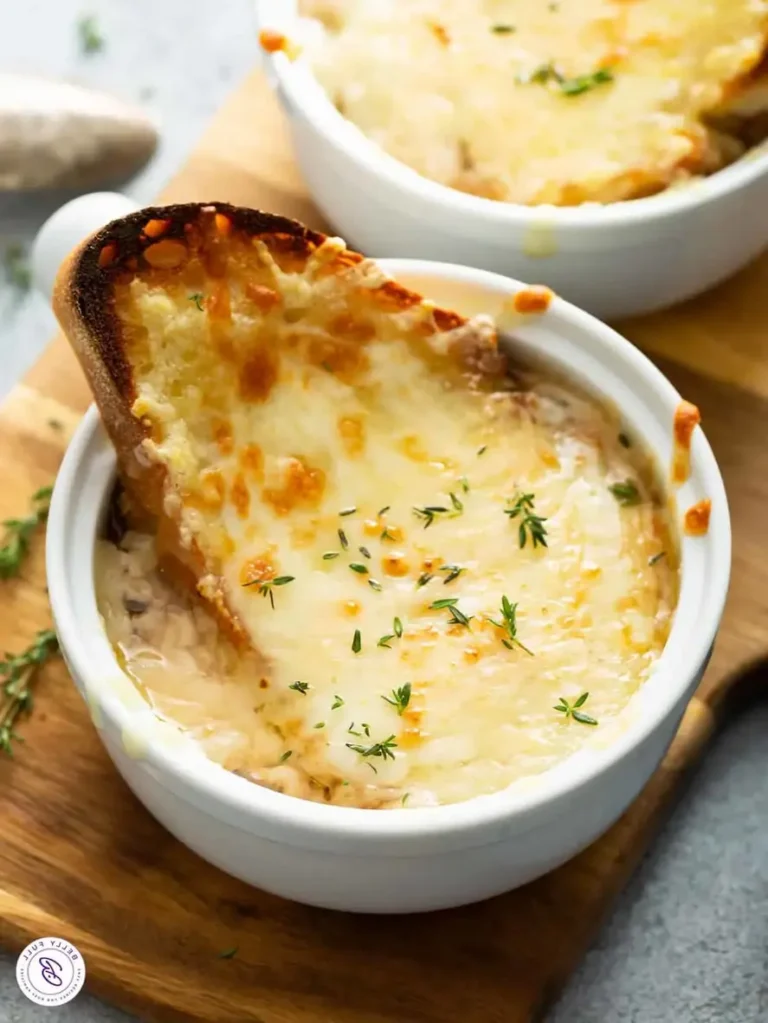
The magic of this French Onion Soup lies in the contrast: the silky, almost jammy sweetness of caramelized onions swimming in a rich, savory broth, contrasted with the nutty, salty crunch of Gruyère, mozzarella, and Parmesan melting over a crusty bread crouton. When you break through that golden cheese seal with your spoon, you’re rewarded with a steam that smells like thyme, wine, and comfort. Each spoonful carries the heart of Paris and the soul of Marrakech, a fusion I’ve perfected after years of cooking in professional kitchens across two continents.
In my years as a chef in NYC, I’ve refined this recipe to be foolproof for home cooks. The trick? Low and slow caramelization, a splash of balsamic for depth, and a secret blend of three cheeses that creates a perfect, stretchy, golden crust. Too many recipes use just one cheese—I promise you, the trio makes all the difference. In this post, I’ll walk you through every step, share the one mistake that ruins the broth, and give you my Paris-trained tip to achieve that flawless cheesy seal every single time.
Why This French Onion Soup Recipe Is the Best
The Flavor Secret: Most French Onion Soup recipes rely on just beef broth. I combine low-sodium beef AND chicken broth for a lighter, more layered base. Then, a splash of Worcestershire and balsamic vinegar adds that umami-rich, slightly sweet complexity that reminds me of the slow-cooked tagines from my childhood. It’s deep, but never heavy.
Perfected Texture: The single most important technique I learned in Paris is patience with the onions. We caramelize them for a full 45 minutes, coaxing out their natural sugars until they’re almost syrupy. This creates a broth that’s not watery, but velvety and thick. The three-cheese topping—Gruyère for nuttiness, mozzarella for stretch, Parmesan for salt—creates a crust that shatters satisfyingly.
Foolproof & Fast: Despite the long cook time, this French Onion Soup is surprisingly hands-off. Most of the time, the onions do the work on their own. The steps are simple: sauté, simmer, toast, and broil. Even if you’ve never made it before, my detailed visual cues and pro tips will ensure your first batch is restaurant-worthy. You don’t need a culinary degree, just a little time and love.
French Onion Soup Ingredients
I love sourcing my onions from the Union Square Greenmarket here in NYC—the variety is incredible, but yellow onions are the workhorse of this soup. A trip to the cheese counter at a good grocery store is essential for the real Gruyère. Don’t skimp.
Ingredients List
- 4 tablespoons unsalted butter
- 5 large yellow onions (thinly sliced)
- 1 teaspoon salt
- 1 teaspoon granulated sugar
- 2 cloves garlic (minced)
- 1/2 cup dry red wine (see note)
- 32 ounces low-sodium beef broth
- 24 ounces low-sodium chicken broth
- 1 tablespoon Worcestershire sauce
- 2 sprigs fresh thyme
- 1 bay leaf
- 1/2 tablespoon balsamic vinegar
- pinch of salt and freshly ground black pepper (to taste)
- 5 1-inch thick slices of French bread
- 2 tablespoons olive oil
- 1 & 1/2 cups shredded Gruyere Swiss cheese (room temperature)
- 1/4 cup shredded Mozzarella cheese (room temperature)
- 2 tablespoons finely grated Parmesan cheese (room temperature)
Ingredient Spotlight
Yellow Onions: They’re the backbone of French Onion Soup. Their high sugar content allows for deep, slow caramelization without burning. Look for firm, heavy onions with no soft spots. Avoid sweet onions like Vidalia—they break down too quickly and make the broth watery.
Gruyère Swiss: This is non-negotiable for the classic flavor. Real Gruyère has nutty, earthy notes that melt beautifully without turning greasy. Buy a block and shred it yourself—pre-shredded cheese has anti-caking agents that prevent smooth melting. A good substitute is Comté or Fontina.
Dry Red Wine: The wine deglazes the pot and adds acidity to balance the sweetness. I use a Pinot Noir or a Côtes du Rhône—something drinkable but not too oaky. See the note: if you don’t cook with wine, you can substitute an equal amount of extra beef broth plus 1 tablespoon of red wine vinegar.
| Original Ingredient | Best Substitution | Flavor / Texture Impact |
|---|---|---|
| Gruyère Swiss | Comté or Fontina | Slightly milder but still nutty and meltable |
| Dry Red Wine | Beef broth + 1 tbsp red wine vinegar | Less depth, but still acidic and tangy |
| Yellow Onions | White or red onions | Red are slightly sweeter; white are sharper. Both work but adjust sugar. |
How to Make French Onion Soup — Step-by-Step
Trust me, the process is simpler than it sounds. Follow these steps, and you’ll have a pot of liquid gold ready for the broiler.
Step 1: Sauté the Onions
In a large pot over medium-high heat, melt the butter. Add the sliced onions and cook, stirring often, until they soften and turn translucent, about 10 minutes. Don’t rush this—it’s the foundation.
💡 Pierre’s Pro Tip: Slice onions pole-to-pole (from root to stem) rather than across the equator. This keeps the rings intact and prevents them from turning to mush during the long caramelization.
Step 2: Caramelize
Reduce the heat to medium. Stir in the salt and sugar. Cook for another 35 minutes, stirring every 5 minutes or so—just enough to prevent sticking. The onions will shrink dramatically and turn a deep golden brown, almost syrupy. Be patient; this is where the magic happens.
⚠️ Common Mistake to Avoid: Turning the heat too high to speed things up. High heat burns the sugar, making the soup bitter. Keep it at medium, and scrape up any brown fond from the bottom—that’s flavor!
Step 3: Deglaze
Add the minced garlic and cook until fragrant, about 20 seconds. Pour in the red wine, scraping up all the brown bits from the bottom and sides of the pot. Let it bubble for a minute to cook off the alcohol.
💡 Pierre’s Pro Tip: Use a wooden spoon for scraping—it’s sturdy and won’t scratch your pot. Get every last bit of that fond, it’s pure umami.
Step 4: Simmer the Broth
Add the beef broth, chicken broth, Worcestershire sauce, thyme sprigs, and bay leaf. Bring to a gentle simmer over medium/medium-low heat. Cook for 20 minutes, stirring occasionally. The flavors will meld beautifully.
⚠️ Common Mistake to Avoid: Boiling the broth vigorously. A gentle simmer (small bubbles barely breaking the surface) extracts flavor without clouding the liquid. Boiling makes the broth bitter and reduces it too quickly.
Step 5: Toast the Bread
Preheat your broiler with the rack about 6 inches from the heat source. Arrange the bread slices on a baking sheet. Brush both sides with olive oil. Broil for 2-3 minutes total, flipping once, until well-toasted and golden on both sides. Watch them like a hawk—they burn fast!
💡 Pierre’s Pro Tip: Slightly stale French bread works best. Fresh bread gets chewy under the broiler; stale bread soaks up the broth without turning to mush and stays crisp on top.
Step 6: Broil and Serve
Remove the herbs from the soup, then stir in the balsamic vinegar. Taste and adjust salt and pepper. Arrange oven-safe bowls on a rimmed baking sheet. Fill each bowl about 2/3 full with the hot soup. Top with a slice of toasted bread, then sprinkle generously with the Gruyère, mozzarella, and Parmesan. Broil for 2-4 minutes, until the cheese is bubbly and golden brown.
⚠️ Common Mistake to Avoid: Adding cold cheese! Room temperature cheese melts evenly and quickly. Cold cheese takes longer to melt, often burning the bread underneath before the top is done.
| Step | Action | Duration | Key Visual Cue |
|---|---|---|---|
| 1 | Sauté onions | 10 minutes | Onions are translucent and have released liquid |
| 2 | Caramelize | 35 minutes | Deep golden brown, syrupy, reduced by half |
| 3 | Deglaze | 1 minute | Wine sizzles and reduces slightly |
| 4 | Simmer broth | 20 minutes | Herbs floating, broth fragrant and dark |
| 5 | Toast bread | 2-3 minutes | Golden brown and crisp on both sides |
| 6 | Broil & serve | 2-4 minutes | Cheese bubbly, golden, with brown spots |
Serving & Presentation
Serving French Onion Soup is a ceremony in my house. Ladle the hot soup into oven-safe bowls—I love using classic white crocks, which I picked up at a flea market in Paris. The key is to fill them just 2/3 full so there’s room for the bread and cheese to create that stunning puffed top.
For a finishing touch, I like to sprinkle a tiny pinch of flaky sea salt and a few grinds of black pepper over the molten cheese right after it comes out of the broiler. It adds a pop of texture and brightness. I also love adding a few fresh thyme leaves for a pop of green—it reminds me of the herb gardens of Morocco.
| Pairing Type | Suggestions | Why It Works |
|---|---|---|
| Side Dish | Simple green salad with vinaigrette, roasted asparagus, or charcuterie board | Acidity and freshness cut through the rich, cheesy soup |
| Sauce / Dip | Dijon mustard or aioli for the bread | Adds a tangy kick that balances the sweetness of the onions |
| Beverage | Light red wine (Pinot Noir), crisp white (Sauvignon Blanc), or a dark beer | Acidity and body complement the soup’s richness |
| Garnish | Flaky sea salt, black pepper, fresh thyme leaves | Adds texture, color, and a final burst of freshness |
Make-Ahead, Storage & Reheating
As a busy New York City food blogger, I often make the soup base on Sunday and assemble it on busy weeknights. The broth only gets better overnight as the flavors meld. One of my favorite secrets: I prep the onions and store them separately from the broth for the best texture.