Table of Contents
French Onion Soup from Famous and Barr – A St. Louis Icon, Made NYC-Style
I still remember the first time I tasted this French Onion Soup from Famous and Barr. It was at a holiday party in St. Louis, hosted by a friend whose family had treasured this recipe for decades. That first spoonful—deeply caramelized onions swimming in a rich, savory broth, topped with a blanket of melted Gruyère—stopped me mid-conversation. The secret, I learned, was patience: a long, slow caramelization of five pounds of onions, then an overnight rest that melds every flavor into pure comfort. This isn’t just any French onion soup; it’s a St. Louis icon, and I’m bringing it straight from the Famous-Barr archives to your kitchen. Rich with onions in a broth and topped with crusty French bread and nutty cheese, it’s the kind of dish that feels like a warm hug on a cold night.
The aroma alone is enough to transport you. As the butter sizzles and the onions soften, their sugars begin to brown and deepen, filling your kitchen with a sweet, savory fragrance that promises greatness. The paprika adds a subtle warmth and a beautiful color, while the bay leaves lend an herbal note that cuts through the richness. Each spoonful is a study in contrasts: the silky, almost jammy onions, the savory broth, the crisp, Parmesan-toasted bread, and the stretchy, browned cheese on top. It’s a bowl of pure, unapologetic indulgence. My Parisian chef instructor used to say that the best onion soup is made with perseverance—and this recipe is a masterclass in that philosophy.
What makes my version stand out? I’ve kept the original Famous and Barr method intact, but I add a few of my own touches: a splash of dry white wine—I prefer a Sauvignon Blanc or a crisp Pinot Grigio—and a long simmer that extracts every bit of flavor from the onions and broth. The overnight rest is non-negotiable; trust me, the soup reaches a depth of flavor the next day that simply can’t be rushed. One common mistake I see is rushing the caramelization—if the heat is too high, the onions will burn and turn bitter. 💡 Pierre’s Pro Tip: Low and slow is the only way to go. Let the onions weep and brown over two hours, and you’ll be rewarded with a soup that tastes like it simmered all day (because it nearly did).
Why This French Onion Soup Recipe Is the Best
The Flavor Secret: This isn’t a thirty-minute onion soup. The recipe calls for a full two-hour caramelization of the onions—and I mean it. That slow, patient cook transforms the onions from sharp and pungent to sweet, buttery, and almost jam-like. Adding the flour as a thickener gives the broth a lush, silky texture that clings beautifully to every spoonful. The paprika isn’t just for color; it adds a gentle, earthy warmth that sets this recipe apart from classic French versions. This unique angle—a St. Louis department store recipe that leans into a richer, slightly thicker broth—makes it a true one-of-a-kind.
Perfected Texture: The overnight rest is where the magic deepens. It allows the flavors to marry, the starches to settle, and the soup to reach a state of balanced perfection. When you reheat it the next day, the broth is even more concentrated and the onions have absorbed the broth’s essence. Then comes the broil: a quick toast of French bread brushed with olive oil and dusted with Parmesan, followed by a blanket of Gruyère that becomes bubbly and golden in minutes. The result is a bowl that’s simultaneously elegant and comforting—a technique I learned as a line cook in Paris.
Foolproof & Fast (once you’ve planned ahead): While the total active time is modest, the recipe requires some forethought. But that’s what makes it perfect for weekends or when you’re hosting. You do the bulk of the work a day ahead, then simply assemble and broil before serving. It’s incredibly forgiving—the onions will wait for you, the broth freezes beautifully, and the whole process is basically mistake-proof if you follow my tips. Even if you’re a beginner, this recipe will make you look like a pro.
French Onion Soup Ingredients
I source my onions from the Union Square Greenmarket in NYC when I can—there’s a stand that sells the most beautiful yellow and white onions. But honestly, any grocery store variety will do. The key is quantity: five pounds. Yes, that’s a lot. But they cook down dramatically, and you’ll be glad for every single one. The cheese is where I sometimes go rogue: Gruyère is the classic, but I’ll often use a good Swiss cheese if I’m feeding a crowd and watching my budget. It melts just as beautifully.
Ingredients List
- 5 pounds white onions (medium size; about 5-6 large onions)
- 1/2 cup unsalted butter
- 1 ½ teaspoons black pepper
- 2 tablespoons paprika (sweet or smoked)
- 1-2 bay leaves
- 3/4 cup all-purpose flour
- 96 ounces beef broth (three 32-oz containers)
- 1 cup dry white wine (Sauvignon Blanc or Pinot Grigio)
- Salt to taste (start with ½ teaspoon)
- 1 loaf French baguette (sliced into 1-inch thick rounds)
- 3 tablespoons olive oil
- 1/4 cup grated Parmesan cheese
- 16 ounces Gruyère cheese, shredded (Swiss cheese works great as a substitute)
Ingredient Spotlight
Yellow Onions: The backbone of the soup. Their natural sugars caramelize into a sweet, savory base. Look for firm, heavy onions without soft spots. If you only have red onions, they’ll work but will yield a slightly tarter flavor. Vidalia or sweet onions can be used, but they may cause the soup to be overly sweet.
Gruyère Cheese: This Swiss cheese is prized for its nutty flavor and exceptional melting quality. It’s a bit pricey, but worth it for the classic experience. For a more affordable swap, use an aged Swiss cheese like Emmental or Jarlsberg—they melt well and have a similar, if slightly milder, flavor. Avoid pre-shredded cheese as it contains anti-caking agents that prevent smooth melting.
Paprika: An unexpected addition in many French onion soups, paprika adds a warm, smoky depth and a lovely reddish hue to the broth. Sweet paprika is classic, but smoked paprika will give the soup a subtle campfire-like flavor. I prefer sweet for this recipe, as it doesn’t overpower the onions.
Beef Broth: Use a high-quality, low-sodium beef broth if you can. It’s the liquid foundation of the soup, so its flavor matters. I often use a mix of beef and chicken broth for a more balanced flavor. The original recipe calls for 96 ounces—that’s 12 cups, enough to create a deeply savory and generous pot of soup.
| Original Ingredient | Best Substitution | Flavor / Texture Impact |
|---|---|---|
| White onions | Yellow or sweet onions | Slightly sweeter, but still caramelize well |
| Gruyère cheese | Aged Swiss (Emmental, Jarlsberg) | Milder flavor, but melts beautifully |
| Paprika | Smoked paprika | Adds a smoky flavor, less sweet |
| Dry white wine | Dry vermouth or additional broth | Less acidity, but still adds depth |
How to Make French Onion Soup — Step-by-Step
Making this soup is a labor of love, but the steps are straightforward. The real key is patience—especially in the caramelization and the overnight rest. Follow these steps, and you’ll be rewarded with an unforgettable French onion soup.
Step 1: Caramelize the Onions
Slice 5 pounds of white onions into 1/8-inch thick rings. In a large, heavy-bottomed pot, melt 1/2 cup of butter over low heat. Add all the sliced onions and stir to coat in the butter. Sauté, stirring occasionally, for 1.5 to 2 hours, or until the onions are deeply golden brown, soft, and sweet. The low heat is crucial—you want them to weep and caramelize, not fry.
💡 Pierre’s Pro Tip: If your onions start to stick, add a tablespoon of water and scrape up the brown bits. This will deglaze the pan and add more flavor to the soup. If they brown too quickly, lower the heat further.
Step 2: Add Seasonings
Once the onions are caramelized, add 1 ½ teaspoons of black pepper, 2 tablespoons of paprika, and 1-2 bay leaves. Stir well and cook for another 2-3 minutes over low heat, stirring frequently, until the spices are fragrant.
⚠️ Common Mistake to Avoid: Don’t leave the paprika on the heat unattended. It can burn quickly and turn bitter. Stirring constantly during these 2-3 minutes is key.
Step 3: Build the Broth
Add 2/3 of the beef broth (about 64 oz) to the pot and stir well to combine. In a separate bowl, whisk the remaining 32 oz of broth with the 3/4 cup of flour until completely smooth. Pour the flour-broth mixture into the pot, stirring constantly. Add 1 cup of dry white wine. Bring the soup to a gentle simmer (not a boil) and let it cook for 2 hours, stirring occasionally. The soup will thicken slightly.
💡 Pierre’s Pro Tip: To avoid lumps, make sure the flour is fully dissolved in the cold broth before adding it to the pot. A whisk is your best friend here. I learned this technique from a chef in Paris who taught me that a lump-free roux is the foundation of a perfect soup.
Step 4: Overnight Rest
After simmering, let the soup cool to room temperature, then cover and refrigerate it overnight. This step is vital—it allows the flavors to meld, the starches to settle, and the soup to reach its full potential. Do not skip it. The next day, you will taste a remarkable difference.
⚠️ Common Mistake to Avoid: Don’t leave the soup on the counter to cool for more than two hours before refrigerating. This can lead to bacterial growth. Cool it quickly by transferring it to a shallow container or using an ice bath.
Step 5: Toast the Bread
When you’re ready to serve, turn on your oven’s broiler. Slice the French baguette into 1-inch thick rounds. Brush each slice with olive oil on both sides and sprinkle with a little grated Parmesan cheese. Place the slices in a single layer on a baking sheet and broil for 1-2 minutes per side, watching very carefully, until they are golden brown and crispy.
💡 Pierre’s Pro Tip: Watch the bread like a hawk under the broiler. It can go from perfectly toasted to burnt in seconds. I usually stand right by the oven door, listening and peeking through the window.
Step 6: Assemble and Broil
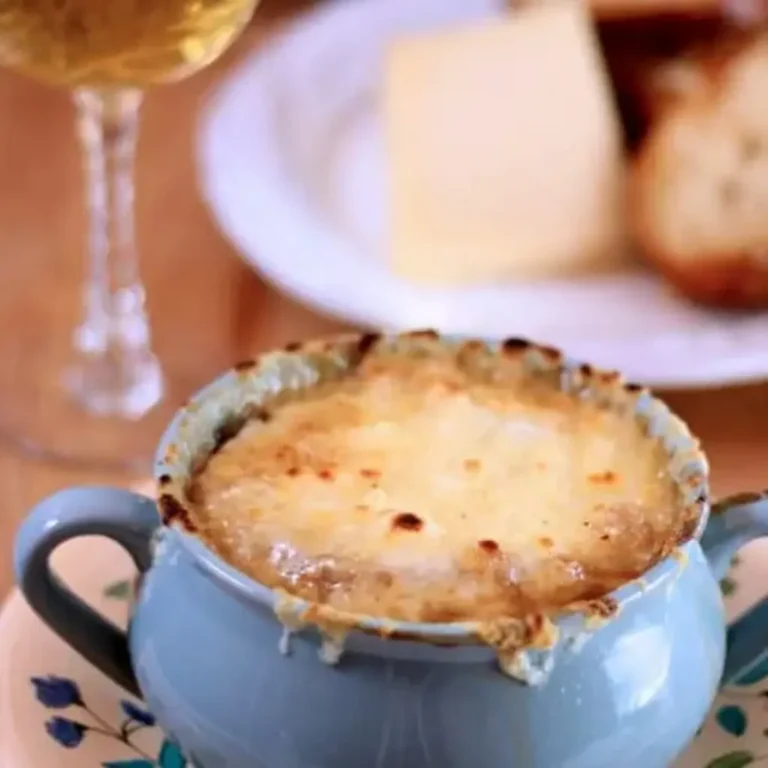
Ladle the hot soup into ovenproof bowls. Top each bowl with 1-2 toasted bread slices (depending on size). Sprinkle generously with shredded Gruyère cheese. Place the bowls on a baking sheet and broil for 3-5 minutes, until the cheese is melted, bubbly, and lightly browned. Watch carefully to prevent burning.
⚠️ Common Mistake to Avoid: Over-broiling the cheese. You want it melted and golden, not dark brown. Also, handle the hot bowls carefully—use oven mitts and place them on a trivet or heatproof surface.
Step 7: Cool and Serve
Let the soup cool for a couple of minutes before serving. The bowls will be extremely hot. The cheese will be stretchy and the broth will be steaming. Garnish with a little fresh thyme or a pinch of extra black pepper if desired. Serve immediately with a spoon.
💡 Pierre’s Pro Tip: Use a sturdy, ovenproof bowl that can withstand the broiler. I love my ceramic onion soup crocks, but any ramekin or small oven-safe bowl works. The thick walls help retain the heat for a longer, more enjoyable eating experience.
| Step | Action | Duration | Key Visual Cue |
|---|---|---|---|
| 1 | Sauté onions | 1.5-2 hours | Deep golden brown, soft |
| 2 | Add seasonings | 2-3 minutes | Fragrant, spices bloom |
| 3 | Add broth and simmer | 2 hours | Soup thickens slightly |
| 4 | Refrigerate overnight | 8-24 hours | Flavors meld, soup thickens |
| 5 | Toast bread | 2-4 minutes total | Golden brown and crispy |
| 6 | Broil cheese | 3-5 minutes | Melted, bubbly, golden |
| 7 | Cool and serve | 2-3 minutes | Cheese is stretchy, soup steams |
Serving & Presentation
The presentation of this soup is part of its magic. Serve it in deep, ovenproof bowls. The contrast between the dark, rich broth, the golden bread, and the bubbly cheese is visually stunning. I love to place the bowls on small plates or a rustic wooden board to catch any drips. Garnish with a pinch of fresh thyme leaves or a twist of black pepper for a pop of color. In my NYC apartment, I often serve this with a simple green salad dressed with a Dijon vinaigrette to cut the richness.
This soup also pairs beautifully with a crisp, dry white wine like a Sauvignon Blanc or a light-bodied red like a Pinot Noir. For a non-alcoholic option, a sparkling water with a wedge of lemon is a perfect palate cleanser. If you’re serving it as a main course, a side of crusty bread for dipping is essential. Sometimes I’ll add a few slices of air-fried prosciutto on top for an extra savory, salty crunch.