Table of Contents
Easy Homemade Hoisin Sauce Recipe – A Sweet, Salty & Spicy Pantry Staple
I remember standing in my mother’s small kitchen in Marrakech, watching her stir a thick, dark sauce into a pot of simmering lamb. She called it something else—a Moroccan twist on a Chinese classic—but the aroma was unmistakably hoisin. That sweet-savory depth, with hints of five-spice and garlic, is what I’ve been chasing ever since. Today, as a trained chef in New York City, I’ve simplified that memory into this easy homemade hoisin sauce recipe. No trips to a specialty store required. With just a few pantry staples, you can whip up a batch that’s richer, fresher, and more customizable than anything from a bottle. The unique angle here? Peanut butter acts as the secret base, giving it a creamy body that traditional recipes often lack—and you can control the heat with your choice of hot sauce.
Imagine the first taste: the salty hit of soy sauce, quickly followed by a mellow sweetness from honey, then a gentle warmth from Sriracha that lingers on your tongue. The garlic adds a pungent, almost floral note, while Chinese five-spice powder weaves in star anise, cinnamon, and cloves—a bouquet of flavors that feels both exotic and comforting. This homemade hoisin sauce isn’t just a condiment; it’s a bridge between cuisines. The texture is velvety, thanks to the peanut butter, and it coats every strip of pork, noodle, or spring roll with a glossy finish. It’s the kind of sauce that makes you pause mid-bite and wonder why you ever settled for the store-bought stuff.
What sets my version apart? It’s the technique I learned at Le Cordon Bleu in Paris—building layers of flavor in a single saucepan, then thickening with a cornstarch slurry for that perfect cling. I’ve tested this recipe a dozen times at my Hell’s Kitchen apartment, tweaking the balance of sweet and salty to suit American palates without losing its Cantonese soul. One pro tip: don’t skip the cornstarch step—it’s the difference between a watery sauce and one that glazes your food like lacquer. A common mistake is adding too much hot sauce upfront; start with a teaspoon and adjust, because you can always add heat, but you can’t take it away. From my NYC kitchen to yours, this easy homemade hoisin sauce recipe will become your new weeknight hero.
Why This Hoisin Sauce Recipe Is the Best
The Flavor Secret: Most supermarket hoisin sauces rely on preservatives and high-fructose corn syrup. My recipe uses peanut butter as its backbone—a trick I picked up from a street vendor in Chinatown who swore it added richness without masking the five-spice. The result is a sauce that’s deeply savory, with a nutty undertone that complements everything from Peking duck to stir-fried vegetables. As a chef, I love that every ingredient here serves a purpose: soy sauce for umami, honey for balanced sweetness, and Sriracha for brightness.
Perfected Texture: The key to a great hoisin sauce is its body. Too thin, and it slides off your food. Too thick, and it becomes a gluey paste. I use a French sauce technique—tempering the cornstarch slurry before adding it to the pot—which gives you silky, pourable consistency every time. It’s the same method I used to make velouté and béchamel in Paris, and it works beautifully here. The sauce clings to noodles, coats chicken wings, and even works as a dipping sauce for dumplings.
Foolproof & Fast: From start to finish, this recipe takes 10 minutes. That’s less time than it takes to run to the store for a bottle, and you probably already have all the ingredients in your pantry. I’ve made it for friends who think they can’t cook, and they’re always amazed at how professional it tastes. No obscure spices, no complicated steps—just honest, bold flavor that you can customize to your heat preference.
Homemade Hoisin Sauce Ingredients
On a Saturday morning, I love browsing the aisles at the Union Square Greenmarket or my local Asian grocery on Canal Street. For this recipe, you’ll find everything at a standard supermarket, but if you want the most aromatic Chinese five-spice powder, I recommend checking a small spice shop in Chinatown. Here’s what you’ll need:
Ingredients List
- 4 tablespoons soy sauce (low-sodium works fine)
- 2 tablespoons rice vinegar (unseasoned)
- 2 tablespoons peanut butter (or tahini for a nut-free option, or black bean sauce for extra depth)
- 3 cloves garlic, minced (or 1 teaspoon garlic powder)
- 2 tablespoons honey (brown sugar is a perfect substitute)
- ½ teaspoon Chinese five-spice powder (add more if you like—I sometimes use a full teaspoon)
- 2 teaspoons Sriracha (or any Chinese hot sauce, chili paste, or your favorite hot sauce)
- 1 teaspoon cornstarch (for thickening)
Ingredient Spotlight
Peanut Butter: This is the heart of the sauce. It provides body and a subtle nuttiness that rounds out the sharp edges of soy and vinegar. Use smooth, unsalted peanut butter if possible, but creamy supermarket brands work too. If you’re allergic, tahini (sesame paste) is an excellent alternative—it adds a slightly earthier flavor that works beautifully.
Chinese Five-Spice Powder: A blend of star anise, cloves, cinnamon, Sichuan peppercorns, and fennel seeds. This spice mix is what gives hoisin its characteristic warmth. I buy mine from a little shop in Flushing, but McCormick makes a decent version found in most US grocery stores. Stale five-spice loses its punch, so replace it every six months.
Rice Vinegar: Mildly acidic and slightly sweet, rice vinegar brightens the sauce without overwhelming it. Don’t substitute with distilled white vinegar—it’s too harsh. Apple cider vinegar can work in a pinch, but use half the amount and taste as you go.
| Original Ingredient | Best Substitution | Flavor / Texture Impact |
|---|---|---|
| Peanut Butter | Tahini | Earthier, less creamy, nut-free |
| Honey | Brown Sugar | More caramel-like sweetness, less floral |
| Sriracha | Chili Garlic Paste | More garlic-forward, less tangy |
| Soy Sauce | Tamari (gluten-free) | Slightly less salty, same umami |
How to Make Homemade Hoisin Sauce — Step-by-Step
Don’t worry—this is as easy as stirring a pot. The whole process takes just 10 minutes, and the results are far superior to anything from a jar. I’ve broken it down into simple steps with my professional tricks along the way.
Step 1: Combine Base Ingredients
Add all the ingredients to a small pot, except for the cornstarch. This includes the soy sauce, rice vinegar, peanut butter, minced garlic, honey, Chinese five-spice powder, and Sriracha. Whisk them together until the peanut butter is mostly incorporated—it will still look a little lumpy, and that’s okay.
💡 Pierre’s Pro Tip: To make the peanut butter dissolve more easily, let it sit at room temperature for a few minutes before starting. Cold peanut butter tends to clump.
Step 2: Heat and Blend
Heat the pot over medium heat and warm through, stirring constantly. This usually takes about 2 minutes. You’ll see the mixture come together as the peanut butter melts and the honey liquefies. Don’t let it boil—just a gentle simmer. Stir until the sauce is smooth and every ingredient is fully combined.
⚠️ Common Mistake to Avoid: Turning the heat too high. If the sauce boils, it may become grainy as the peanut butter separates. Keep it at a medium-low temperature if you’re unsure.
Step 3: Make Cornstarch Slurry
In a small bowl, whisk the cornstarch with 2 tablespoons of cold water, until the cornstarch dissolves completely. This is called a slurry. The cold water prevents clumps from forming. You should have a thin, milky liquid with no white specks.
💡 Pierre’s Pro Tip: Always use cold water for the slurry. Hot water will cause the cornstarch to clump before it even goes into the pot, ruining the texture.
Step 4: Thicken the Sauce
Pour the cornstarch and water mixture into the hoisin sauce pot and whisk until well combined. You’ll notice the sauce start to thicken almost immediately. Whisk continuously for about 1-2 minutes to ensure even thickening and to prevent any lumps from forming.
Step 5: Simmer and Serve
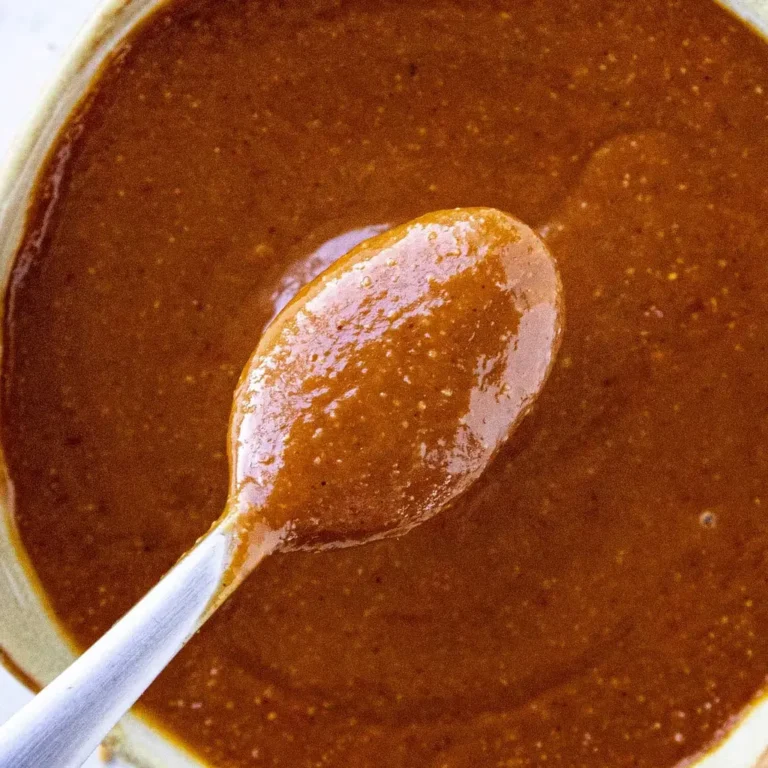
Heat for another 1-2 minutes, until the hoisin sauce thickens to a syrupy consistency. It should coat the back of a spoon. Remove from heat, let it cool for 5 minutes, and serve! If you want a thinner sauce, add a tablespoon of water at the end and whisk again.
⚠️ Common Mistake to Avoid: Over-thickening. The sauce will continue to thicken as it cools, so remove it from the heat when it’s still a little runnier than you think it should be.
| Step | Action | Duration | Key Visual Cue |
|---|---|---|---|
| 1 | Combine base ingredients in pot | 1 minute | Lumpy, brownish mixture |
| 2 | Heat and stir until smooth | 2 minutes | Shiny, cohesive sauce |
| 3 | Make cornstarch slurry | 30 seconds | Milky, no lumps |
| 4 | Add slurry and whisk | 2 minutes | Sauce thickens noticeably |
| 5 | Simmer to final consistency | 1-2 minutes | Coats the back of a spoon |
Serving & Presentation
This homemade hoisin sauce is incredibly versatile. In my apartment, I use it as a glaze for roasted chicken thighs—brush it on during the last 10 minutes of baking for a sticky, caramelized finish. It’s also perfect as a dipping sauce for spring rolls, dumplings, or crispy tofu. I’ll sometimes drizzle it over steamed broccoli or roasted Brussels sprouts for a savory kick that turns a simple side into a standout.
For a presentation that wows, serve the sauce in a small ceramic bowl with a drizzle of sesame oil and a sprinkle of sesame seeds on top. If you’re making a stir-fry, toss the sauce with the noodles and vegetables off the heat—this prevents it from becoming too thick. In the summer, I love using it as a marinade for grilled pork chops; the soy and honey create a beautiful char without burning.
| Pairing Type | Suggestions | Why It Works |
|---|---|---|
| Side Dish | Steamed rice, stir-fried noodles, roasted vegetables | Sauce absorbs and enhances every bite |
| Sauce / Dip | Spring rolls, dumplings, crispy chicken wings | Sweet and salty balance cuts through richness |
| Beverage | Iced green tea, a crisp lager, or a light Pinot Gris | Refreshing contrast to the sauce’s intensity |
| Garnish | Sesame seeds, sliced green onions, chili flakes | Adds texture and visual appeal |
Make-Ahead, Storage & Reheating
Living in NYC means I’m always meal-prepping, and this sauce is a lifesaver. I make a double batch on Sunday, and it lasts all week in the fridge. It’s even better the next day as the flavors meld together. Here’s how I store it: