Table of Contents
Dairy Free Butter Chicken – Creamy, Rich & Whole30 Friendly
I’ll never forget the first time I made this Dairy Free Butter Chicken in my tiny Paris kitchen. I was a young cook at Le Cordon Bleu, missing the bold, comforting flavors of home in Morocco. My mother’s tagines were rich and layered, but I wanted something that combined that warmth with a creamy, decadent sauce — minus the dairy that sometimes upsets my stomach. That’s when the idea struck: swap heavy cream and yogurt for full-fat coconut milk. The result was so luxurious, so satisfying, that my French classmates asked for the recipe. Today, as a chef in NYC, this dairy free butter chicken is one of my most requested dishes — it’s paleo, Whole30 friendly, and absolutely bursting with flavor. No one misses the dairy, I promise you that. Every spoonful is a hug of ginger, garlic, garam masala, and silky coconut.
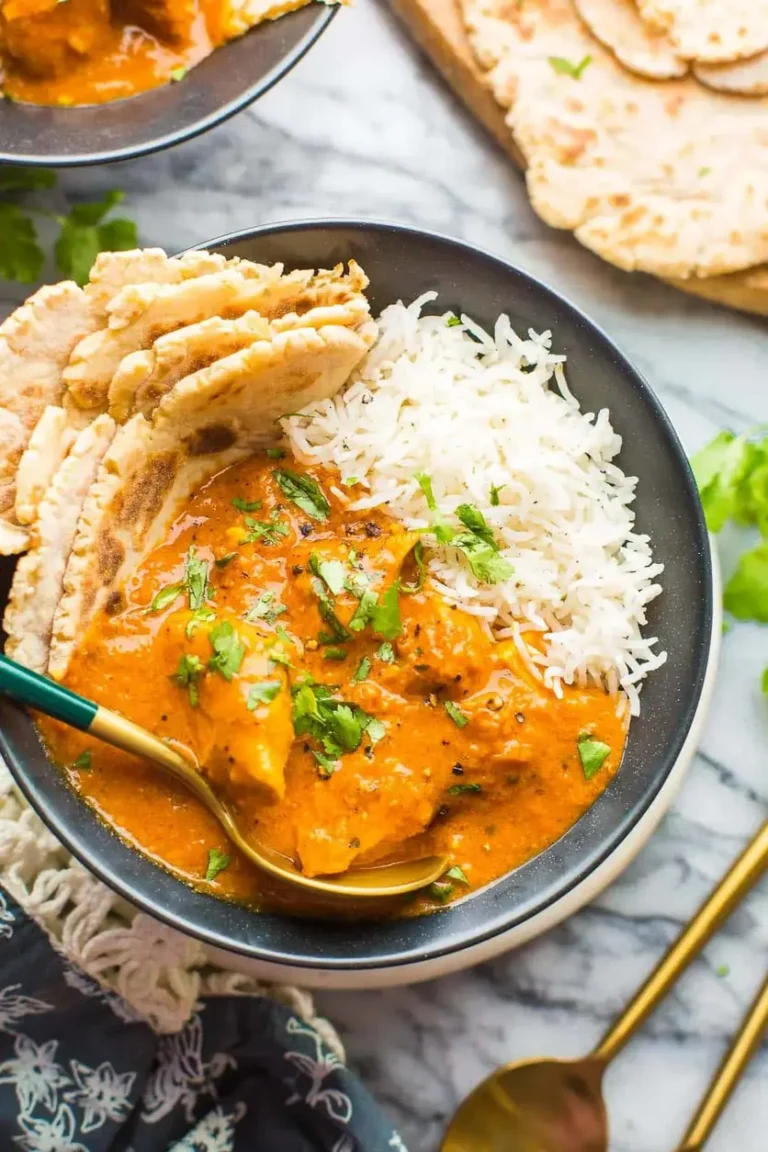
Imagine this: the fragrance of toasted cumin and coriander fills your kitchen. The sauce is a deep, burnished red-brown, its surface glossy with swirl of coconut cream. Tender chunks of chicken nestle in that velvety bath, each bite juicy and imbued with marinade. The heat from a fresh chili lingers gently, balanced by a whisper of sugar and the earthy note of dried fenugreek. When you dip a piece of warm naan (or, for Whole30, a roasted cauliflower floret) into that sauce, you taste layers — bright lemon, mellow coconut, and a chorus of warm spices. It’s comfort that stretches from the streets of Delhi to my childhood kitchen in Marrakech, filtered through a Parisian technique and an American love for big, bold flavor. This is not a compromise. This is butter chicken, reimagined.
What makes my version stand out? It’s the technique. I brown the chicken in batches to develop a deep fond (those caramelized bits on the bottom of the pan), then build the sauce from there. Many recipes skip this step, but I learned in Paris that browning is the foundation of any great sauce. Second, I blend the sauce until it’s silky-smooth — an immersion blender makes it effortless. Third, I finish with a splash of extra coconut cream stirred in off the heat for a final, luscious richness. I’ll also share a trick I learned from my mother: a pinch of dried fenugreek leaves (kasoori methi) added at the end elevates the dish from good to unforgettable. Avoid the common mistake of skipping the marinade; those 30 minutes (or better yet, overnight) are essential for flavor. Let’s get cooking.
Why This Dairy Free Butter Chicken Recipe Is the Best
The Flavor Secret
The secret is the marinade. Most recipes marinate the chicken in yogurt, but I use a blend of coconut milk, lemon juice, and fresh ginger-garlic paste. This tenderizes the meat without any dairy, and the acidity of the lemon brightens the entire dish. I also bloom the spices twice — once in the marinade and again in the sauce — which creates a deep, aromatic complexity that tastes like hours of slow simmering. My North African roots taught me that spice layering is everything. Garam masala isn’t just a garnish here; it’s a backbone. This is the dairy free butter chicken that will have you licking the bowl clean.
Perfected Texture
Texture is where this recipe truly shines. The coconut milk provides a velvety consistency that mimics heavy cream beautifully, but it requires a gentle hand. I reduce the sauce before blending to concentrate flavor and achieve the perfect body — not too thin, not too heavy. The chicken is seared until golden, locking in juices, then finished in the sauce for just 10 minutes so it stays tender. No dry, stringy meat here. I’ve tested this over 20 times in my NYC kitchen, adjusting the water-to-tomato-paste ratio for that ideal, coat-the-spoon richness. It’s a restaurant-quality sauce made at home.
Foolproof & Fast
I’ve designed this recipe to be accessible for home cooks. You don’t need a tandoor or special equipment. A large skillet or Dutch oven and a blender (or immersion blender) are all you need. The steps are straightforward: marinate, sear, sauté, simmer, blend, finish. I provide clear timings and visual cues — when the onions turn translucent, when the oil sizzles, when the sauce thickens — so you always know what to look for. Even if you’re new to Indian-inspired cooking, you’ll nail this on the first try. And because it’s dairy free, it’s perfect for anyone with sensitivities or following a paleo or Whole30 meal plan.
Dairy Free Butter Chicken Ingredients
I love sourcing ingredients for this dish at the Union Square Greenmarket in NYC, or from my local Indian grocery in Jackson Heights. The fresh ginger and garlic are non-negotiable — please don’t use the pre-minced jarred stuff. It lacks the punch. For the chili, I use a serrano or a mild Fresno; avoid habanero unless you want serious heat. The coconut milk must be full-fat from a can (not a carton) for that creamy texture. Here’s my complete ingredient list with exact US measurements.
Ingredients List
- ½ cup full fat coconut milk, coconut cream or coconut yoghurt (114g) – see notes
- 1 tbsp fresh lemon juice (15 ml)
- 1 tbsp ginger, minced
- 1 ½ tbsp minced garlic
- 2 tsp garam masala
- ½ tsp black pepper
- 1 tsp turmeric
- ½ tsp salt
- 2 lbs boneless, skinless chicken breasts and/or thighs cut into bite-sized pieces (900g)
- 4 tbsp coconut oil, divided (60g)
- 1 onion, finely diced
- 5 garlic cloves, minced
- 4 tsp freshly grated ginger
- 1 chili, stemmed, seeded and minced (serrano or Fresno recommended)
- 1 tbsp garam masala
- 1 tsp ground coriander
- ½ tsp ground cumin
- ½ tsp black pepper
- 1 ½ cups water (360ml)
- ½ cup tomato paste (64g)
- 1 tbsp sugar (optional for Whole30, use coconut sugar or omit)
- 1 tsp salt
- ½ tsp dried fenugreek or kasoori methi (optional but highly recommended)
- 1 cup unsweetened full fat coconut milk or coconut cream from a can (228g)
Ingredient Spotlight
Let me walk you through the star players and their perfect substitutes, tested in my own kitchen.
| Original Ingredient | Best Substitution | Flavor / Texture Impact |
|---|---|---|
| Full-fat coconut milk (for sauce) | Cashew cream (soaked cashews blended with water) | Slightly nuttier, less sweet, same silky consistency. Best for nut milk lovers. |
| Tomato paste | Crushed tomatoes (reduce water to 1 cup) | Lighter color, thinner sauce. Simmer 5 extra minutes to thicken. |
| Dried fenugreek (kasoori methi) | Maple syrup (1 tsp) + pinch celery seed | Adds subtle sweetness and herbal note, not identical but tasty. |
| Fresh chili (serrano) | ½ tsp red pepper flakes | More diffuse heat, less floral. Add to taste. |
| Coconut oil | Ghee (if not strictly dairy-free) or avocado oil | Ghee adds buttery note; avocado oil is neutral. Works well. |
How to Make Dairy Free Butter Chicken — Step-by-Step
Follow these steps, and you’ll have a restaurant-quality curry that’s entirely dairy free. I’ll guide you through each stage with pro tips and common mistakes to avoid.
Step 1: Make the Marinade
In a large mixing bowl, whisk together ½ cup coconut milk (or yogurt), lemon juice, 1 tbsp minced ginger, 1 ½ tbsp minced garlic, 2 tsp garam masala, ½ tsp black pepper, 1 tsp turmeric, and ½ tsp salt. The mixture should be thick and fragrant. Make sure the turmeric is well incorporated to avoid yellow streaks. This marinade is the flavor foundation for the entire dish, so don’t rush it.
💡 Pierre’s Pro Tip: Use full-fat coconut milk for the marinade — the fat helps carry the spices into the chicken. If using coconut yogurt, make sure it’s unsweetened plain.
Step 2: Marinate the Chicken
Add the chicken pieces to the bowl and toss well to coat every piece. Cover and marinate at room temperature for 30 minutes, or refrigerate up to 24 hours. The longer the better — the acid and spices penetrate the meat, ensuring every bite is flavorful and tender.
⚠️ Common Mistake to Avoid: Don’t marinate for less than 30 minutes. You need that time for the lemon juice to tenderize and the spices to soak in. Also, don’t use a metal bowl; use glass or ceramic to prevent a metallic taste.
Step 3: Sear the Chicken
Heat 2 tbsp of coconut oil in a large heavy-bottomed pot or skillet over medium-high heat. When the oil shimmers and a drop of water sizzles, add the chicken pieces in a single layer — work in 2-3 batches to avoid overcrowding. Sear for 3 minutes per side until golden brown. Remove the chicken to a plate. The browning develops incredible flavor and creates fond on the pan for the sauce.
💡 Pierre’s Pro Tip: Don’t move the chicken too much while it sears. Let the surface caramelize undisturbed for the best crust. If your pan is too crowded, the chicken will steam instead of brown.
Step 4: Sauté the Aromatics
Reduce heat to medium and add the remaining 2 tbsp coconut oil to the same pot. Add the finely diced onion. Cook 5-7 minutes, stirring frequently, until the onion turns translucent and soft. Add the 5 minced garlic cloves, 4 tsp grated ginger, and the minced chili. Cook for 1 minute until fragrant. This builds the aromatic base of the curry.
⚠️ Common Mistake to Avoid: Burning the garlic and ginger. Keep the heat medium, and if the pan seems dry, add a splash of water to deglaze rather than letting them scorch.
Step 5: Build the Sauce Base
Turn the heat down to medium-low. Add the tomato paste, 1 tbsp garam masala, 1 tsp coriander, ½ tsp cumin, and ½ tsp black pepper. Cook for 2-3 seconds, stirring constantly. The paste will darken and become fragrant. If the pan looks too dry, add 1-2 tbsp of water to release the fond from the bottom.
💡 Pierre’s Pro Tip: Blooming the spices in the tomato paste is a French technique that deepens their flavor. Don’t skip this short step — it makes the sauce taste cooked all day.
Step 6: Simmer the Sauce
Stir in 1 ½ cups water, 1 tbsp sugar (or coconut sugar), and 1 tsp salt. Bring to a gentle simmer over medium heat. Let it cook uncovered for at least 15 minutes, stirring occasionally. The sauce will thicken and deepen into a reddish-brown color. This reduction concentrates the flavors and creates a rich texture.
⚠️ Common Mistake to Avoid: Simmering at too high a heat — it can cause the tomato paste to scorch or splatter. Keep it at a gentle bubble, not a rolling boil.
Step 7: Blend the Sauce
Remove the pot from the heat. Use an immersion blender directly in the pot (or transfer to a regular blender in batches) to purée the sauce until completely smooth. Be careful with hot liquid in a blender — fill only halfway, remove the center cap to let steam escape, and cover with a towel. Pour the smooth sauce back into the pot.
💡 Pierre’s Pro Tip: An immersion blender is safer and easier for this step. If using a countertop blender, pulse a few times first to release steam, then blend. A smooth sauce is the key to that velvety butter chicken texture.
Step 8: Combine and Simmer
Stir the remaining 1 cup full-fat coconut milk into the smooth sauce. Add the seared chicken pieces back to the pot. Simmer over medium-low heat for 10 minutes, allowing the chicken to finish cooking and absorb the sauce. Stir in the dried fenugreek (kasoori methi) if using. The sauce should be thick, creamy, and coat the back of a spoon.
⚠️ Common Mistake to Avoid: Don’t add the chicken too early or simmer too long. Ten minutes is perfect — any longer and the chicken can become dry. Also, don’t skip the fenugreek; it adds that authentic restaurant flavor.
Here’s a quick reference table to keep you on track:
| Step | Action | Duration | Key Visual Cue |
|---|---|---|---|
| 1 | Make marinade | 5 mins | Smooth, fragrant paste |
| 2 | Marinate chicken | 30 mins | Chicken fully coated |
| 3 | Sear chicken | 6 mins per batch | Golden brown crust |
| 4 | Sauté aromatics | 6-8 mins | Onions translucent, garlic fragrant |
| 5 | Cook spice paste | 2-3 mins | Paste darkens, smells aromatic |
| 6 | Simmer sauce |