Table of Contents
French Antilles Coconut Flan (Flan Coco) – A Taste of Paradise in Your Oven
I still remember the first time I tasted a silky French Antilles Coconut Flan—it was on a trip to Martinique a few years back, a little escape from the New York winter. The moment that spoonful of creamy, coconut-infused custard touched my lips, I was transported. The rich caramel, the tender shredded coconut, the way it all melts together—this French Antilles Coconut Flan (Flan Coco) is a dessert that captures the soul of the Caribbean in every bite. Growing up in Morocco, my mother made a version with almonds and rose water, but this coconut version, with its tropical elegance, has become my summer go-to in my NYC kitchen.
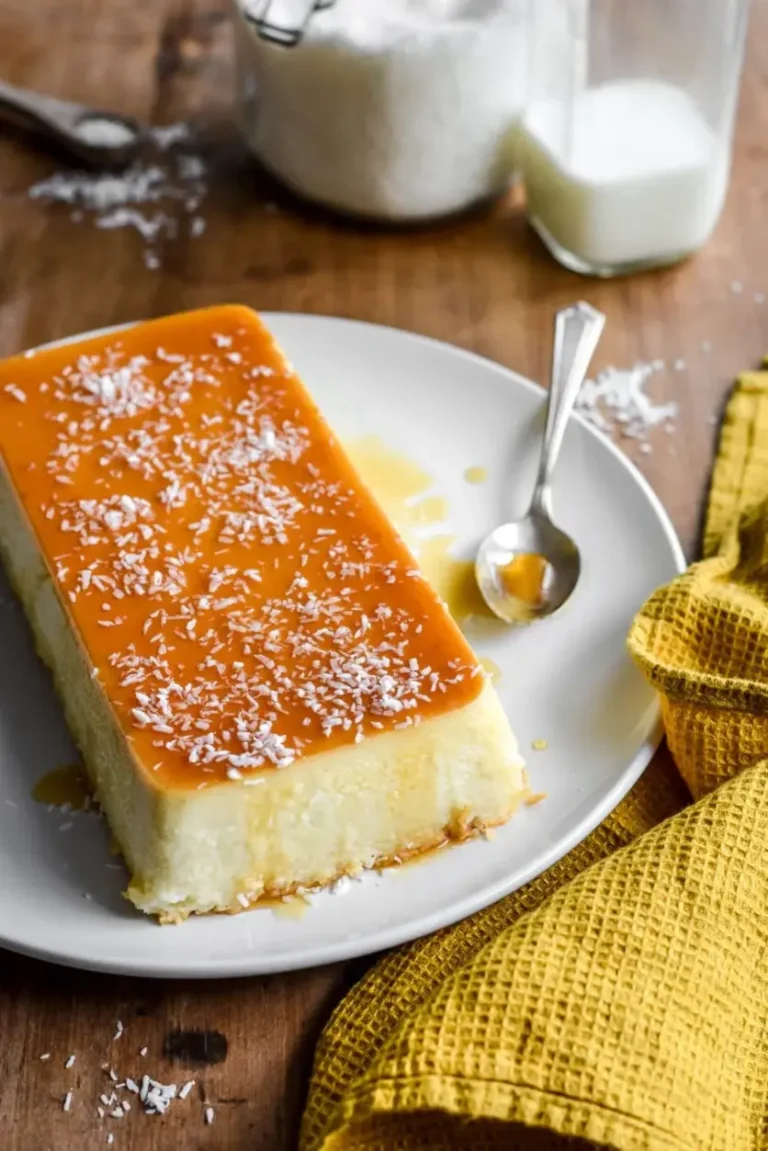
What makes this flan so special is the harmony of textures: a firm, jiggly custard that’s not too dense, laced with threads of tender coconut, and topped with a golden caramel that pools around the plate when you unmold it. The coconut flavor is deep but not overwhelming, thanks to the combination of coconut milk and shredded coconut. I love the slight chewiness the shredded coconut adds, a contrast to the otherwise velvet-smooth flan. It’s the kind of dessert that feels both rustic and refined—perfect for a dinner party or a quiet Sunday treat.
In this recipe, I’m sharing my perfected method for making French Antilles Coconut Flan with a simple, no-stir caramel and a foolproof water bath technique. My secret? I let the flan chill for at least three hours—overnight is even better—to let the flavors meld and the texture set perfectly. One mistake I see home cooks make is stirring the caramel—resist that urge! Let it do its thing. I’ll show you how to get that deep amber color every time. Let’s make this tropical dream together.
Why This French Antilles Coconut Flan Recipe Is the Best
The flavor secret here is balance. My French Antilles Coconut Flan uses both sweetened condensed milk and unsweetened shredded coconut, so the sweetness is controlled and the coconut flavor is pure and natural. In traditional French Antilles flan, you might find evaporated milk, but I’ve swapped it for coconut milk to deepen the tropical profile. It’s a trick I picked up from a pastry chef in Paris who specialized in creole desserts—she taught me that coconut milk adds richness without weighing down the custard.
Texture is everything in a flan, and I’ve perfected it by avoiding over-baking. The water bath (bain-marie) is non-negotiable here: it ensures gentle, even heat so the eggs cook slowly and the flan stays creamy, not rubbery. I bake mine until the center just barely wobbles when shaken—that’s the sign of a perfect set. The shredded coconut adds a pleasant bite that keeps every spoonful interesting, and the caramel, made with just sugar and no water, gives a clean, bitter-sweet finish that cuts through the richness.
This recipe is foolproof even for beginners because I’ve stripped away any unnecessary steps. The caramel is a one-ingredient affair (just sugar), and the custard comes together in one bowl with a whisk—no need for a blender or mixer. As long as you follow the visual cues (amber caramel, wobbly center), you’ll get a stunning flan every time. Plus, it’s make-ahead friendly, which is a lifesaver for busy weeknights or entertaining. Trust me, this is the easiest, most rewarding flan you’ll ever make.
French Antilles Coconut Flan Ingredients
These ingredients are the heart of this dessert. When I’m in New York, I head to the Caribbean bodega in Harlem for the best coconut milk and shredded coconut, but everything here is available at any well-stocked supermarket. Each component has a job, and together, they create magic.
Ingredients List
- 1 1/2 cup + 1 tbsp (400ml/14oz) sweetened condensed milk
- 1 1/4 cup (300ml /10.15 fl oz) coconut milk (can)
- 3 large eggs
- 1 tsp vanilla extract (or seeds of ½ vanilla bean)
- 1 cup (95g) unsweetened shredded coconut (plus extra for garnish)
- For the caramel: ½ cup (100g) sugar
Ingredient Spotlight
Sweetened Condensed Milk: This is the backbone of the flan’s sweetness and creamy texture. It’s thicker than regular milk and adds a lush, velvety consistency. In the US, look for brands like Eagle Brand or Carnation. If you’re dairy-free, you can use a sweetened condensed coconut milk alternative (like Nature’s Charm), but the flan will be slightly less rich.
Coconut Milk (Canned): The key to that deep, authentic coconut flavor. I recommend full-fat coconut milk for the best richness—not the light version, which will make the flan watery. Shake the can well before opening to blend the cream and liquid. Chaokoh or Aroy-D are excellent brands available in most US grocery stores.
Unsweetened Shredded Coconut: This adds texture and a natural coconut chew. Unsweetened is important here because the condensed milk already brings plenty of sweetness. I use Bob’s Red Mill or store-brand shredded coconut. Avoid sweetened flaked coconut, as it changes the sugar balance and can make the flan too cloying.
Eggs: Large eggs at room temperature are crucial for a smooth custard. Cold eggs can cause the mixture to curdle slightly or not emulsify properly. I always let mine sit on the counter for 15 minutes before whisking.
| Original Ingredient | Best Substitution | Flavor / Texture Impact |
|---|---|---|
| Sweetened condensed milk | Sweetened condensed coconut milk (dairy-free) | Slightly less rich, but more coconut-forward |
| Coconut milk (canned) | Coconut cream (more fat) + 2 tbsp water | Richer, creamier, more decadent |
| Unsweetened shredded coconut | Finely chopped dried coconut chips | Larger, crunchier texture; reduce amount by 1/4 cup |
| Large eggs | 4 large egg yolks (for extra richness) | Firmer set, more custard-like, less jiggly |
How to Make French Antilles Coconut Flan — Step-by-Step
Making this flan is a labor of love, but I promise each step is simple. Start by reading through all the instructions so you know what to expect—it’s a straightforward process that rewards patience.
Step 1: Make the Caramel
Place the ½ cup of sugar in a small, clean saucepan over medium heat. Do not stir—just let the sugar melt. You can occasionally shake the pan gently to distribute the sugar. The sugar will first clump, then melt into a clear liquid, and finally bubble into a golden amber. Watch closely: when it turns a deep amber color (think of the color of a penny), immediately remove from the heat and pour it into your ungreased loaf pan, tilting the pan to coat the bottom evenly. Set aside to cool and harden—this takes about 10 minutes.
💡 Pierre’s Pro Tip: Caramel can go from perfect to burnt in seconds. To test the color, dip a wooden skewer into the caramel—it should be a rich amber, not dark brown. Once it’s amber, pour it out fast.
Step 2: Mix the Custard
In a large mixing bowl, whisk together the condensed milk, coconut milk, eggs, vanilla extract, and shredded coconut. Whisk gently until smooth—don’t overmix or you’ll introduce too many air bubbles. Pour this mixture over the hardened caramel in the loaf pan.
⚠️ Common Mistake to Avoid: Don’t whisk too vigorously—you want the custard to be smooth, not frothy. Bubbles on top will create holes in the finished flan. A gentle, steady whisk is your friend.
Step 3: Bake in a Water Bath
Place the loaf pan into a larger baking dish (like a 9×13-inch pan). Carefully pour hot water into the larger dish until it reaches about 1/4 up the sides of the loaf pan—this is the water bath, or bain-marie. Bake for 50–55 minutes at 350°F (180°C), until the top is lightly golden and firm to the touch. The center should still have a slight wobble when you gently shake the pan.
💡 Pierre’s Pro Tip: For the water bath, use hot tap water, not boiling. Boiling water can shock the custard and create an uneven texture. And always place the loaf pan in the larger dish before adding the water to avoid splashing the custard.
Step 4: Cool and Chill
Remove the flan from the water bath and let it cool on a wire rack to room temperature. Once cooled, cover with plastic wrap (pressing it directly onto the surface to prevent a skin from forming) and refrigerate for at least 3 hours—overnight is best for the most stable texture and deepest flavor.
⚠️ Common Mistake to Avoid: Don’t skip the chilling time. If you try to unmold the flan while it’s still warm, the caramel will be too runny and the flan will fall apart. Patience pays off here.
Step 5: Unmold and Serve
When you’re ready to serve, fill a large dish with about 2 inches of warm water (not hot). Place the loaf pan in the water for 2–3 minutes to soften the caramel at the bottom. Run a thin knife around the edges of the pan to loosen the flan. Invert a serving plate over the pan, hold tightly, and quickly flip over. The flan should release with a gentle thud. Sprinkle with extra shredded coconut before serving.
💡 Pierre’s Pro Tip: If the flan doesn’t release immediately, don’t panic—just place the pan back in the warm water for another minute. A quick, confident flip is key, so take a deep breath and go for it!
| Step | Action | Duration | Key Visual Cue |
|---|---|---|---|
| 1 | Caramelize sugar | 5–7 mins | Amber color, no stirring |
| 2 | Whisk custard | 2 mins | Smooth, no lumps |
| 3 | Bake in water bath | 50–55 mins | Golden top, slight wobble |
| 4 | Chill | 3 hrs – overnight | Firm, not jiggly |
| 5 | Unmold | 2–3 mins in warm water | Caramel flows freely |
Serving & Presentation
This French Antilles Coconut Flan is a showstopper on its own, but the way you present it can elevate it even further. After unmolding, the caramel pools around the flan like a golden moat—this is part of the beauty. I like to garnish with a generous sprinkle of toasted shredded coconut for extra crunch and visual appeal. A few fresh mint leaves or edible flowers (like pansies) add a pop of color that contrasts beautifully with the creamy flan.
In my NYC apartment, I serve this flan at room temperature (it’s best after 20 minutes out of the fridge) with a dollop of lightly sweetened whipped cream or a scoop of coconut sorbet for a double-coconut treat. It pairs wonderfully with a strong espresso or a dark rum cocktail—the bitterness cuts through the sweetness. For a Moroccan twist, I sometimes add a sprinkle of ground cinnamon or a drizzle of honey, which reminds me of my mother’s desserts.
Whether it’s for a summer barbecue, a holiday dinner, or just a quiet afternoon dessert, this flan feels special. Slice it into thick portions with a clean knife (wipe between cuts for neat edges), and watch your guests’ eyes light up.
| Pairing Type | Suggestions | Why It Works |
|---|---|---|
| Side Dish | Fresh tropical fruit (mango, pineapple, papaya) | Bright acidity and freshness balance the rich custard |
| Sauce / Dip | Caramel sauce, dark rum caramel, or passion fruit coulis | Intensifies the caramel flavor or adds a tart contrast |
| Beverage | Espresso, dark rum, coconut water, or black tea | Bitterness and tannins cut through the sweetness |
| Garnish | Toasted shredded coconut, mint, edible flowers, lime zest | Adds texture, color, and a bright finish |
Make-Ahead, Storage & Reheating
This French Antilles Coconut Flan is a dream for busy schedules because it actually gets better with time. In my NYC life, I often make it the night before a dinner party—it chills overnight, and all I have to do is unmold and garnish before serving. The flavors meld and deepen as it sits, making the second day even more flavorful.